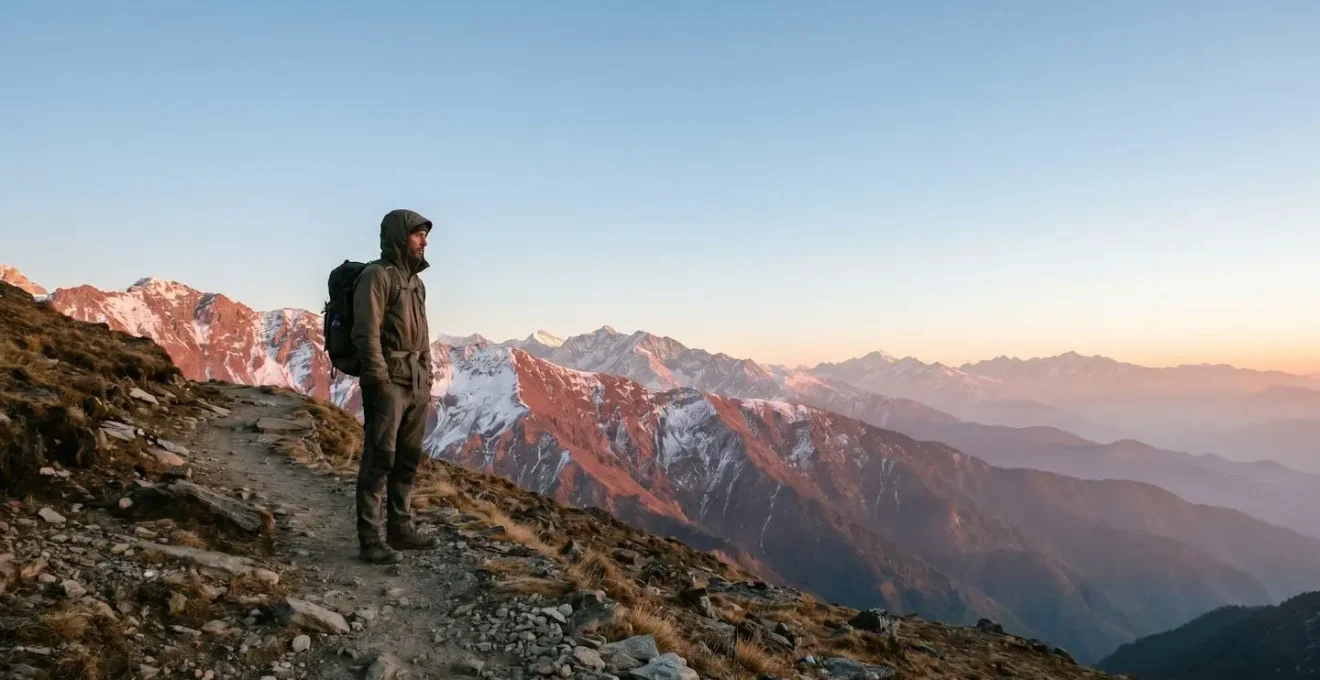
Contrary to popular belief, peak physical fitness does not grant immunity to altitude sickness; it can actively increase your risk by encouraging a dangerously fast ascent.
- The “Fitness Paradox” shows that highly fit individuals often ascend too quickly, leading to higher rates of Acute Mountain Sickness (AMS).
- True acclimatisation is a physiological discipline based on slow, deliberate ascent protocols, strategic rest, and radical self-awareness—not athletic endurance.
Recommendation: Abandon the “push through” mentality. Prioritise a conservative ascent schedule over speed, and learn to recognise the non-negotiable warning signs that demand immediate descent.
For any trekker setting their sights on the majestic peaks above 4,000 metres, the primary concern is not just reaching the summit, but doing so safely. The thin air of high altitude presents a profound physiological challenge to the human body, one that is indifferent to your marathon time or your strength in the gym. The conversation around altitude sickness is often filled with well-meaning but generic advice: “go slow,” “stay hydrated,” “listen to your body.” While correct, this advice fails to capture the critical nuances of the acclimatisation process.
The core misunderstanding is treating acclimatisation as a test of physical endurance. Many assume that being fitter means being better prepared for the mountain. This article challenges that dangerous assumption. We will explore the counter-intuitive reality that elite fitness can be a liability, creating a “Fitness Paradox” that leaves the strongest trekkers vulnerable. This is not a guide about pushing your limits; it is a medical and strategic framework for respecting them.
Instead of focusing on endurance, we will pivot to a model of physiological dialogue—learning to interpret the body’s signals with clinical precision. We will deconstruct the psychological traps, like “summit fever,” that lead to “cognitive override” and fatal decisions. This guide will provide you with the knowledge to manage your ascent not as an athlete, but as a disciplined expeditioner, ensuring your adventure is memorable for the views, not for a medical emergency.
To navigate this complex topic, this guide is structured to build your expertise progressively. We will begin by deconstructing a dangerous myth about fitness and altitude, then provide a clear acclimatisation protocol, detail the critical warning signs, and explore the psychological factors that can turn a manageable condition into a life-threatening one.
Summary: Your Strategic Guide to High-Altitude Safety
- Why Does Altitude Sickness Affect Fit People More Than Expected?
- How to Acclimatise Properly When Ascending Above 4,000 Metres?
- What Are the Warning Signs of Serious Altitude Sickness Requiring Descent?
- The “Push Through” Mentality That Turns Altitude Sickness Fatal
- How to Use Rest Days Strategically for Altitude Adaptation?
- The Acclimatisation Error That Hospitalises 20% of Everest Base Camp Trekkers
- Why Do 85% of Adventure Accidents Involve Unqualified Guides?
- How to Vet a Guide to Avoid Becoming a Statistic
Why Does Altitude Sickness Affect Fit People More Than Expected?
One of the most dangerous misconceptions in high-altitude trekking is that physical fitness provides a robust shield against altitude sickness. From a medical standpoint, the opposite is often true. This phenomenon, which can be termed the “Fitness Paradox,” stems from a combination of physiological and psychological factors. Fit individuals have a higher capacity for physical exertion, which allows them to ascend much faster than their less-fit counterparts. This rapid ascent is the single greatest risk factor for developing Acute Mountain Sickness (AMS).
The body needs time to make the complex physiological adjustments to lower oxygen levels (hypoxia), and a swift ascent simply doesn’t provide that window. As Dr. Michael Koehle of the University of British Columbia’s Altitude Medicine Clinic notes, “Fitness alone doesn’t grant you immunity to altitude sickness; in fact, very fit hikers often go too fast and overexert themselves, leaving them even more vulnerable to problems.” This is not just anecdotal. A controlled study comparing endurance-trained and untrained men found that 42% of endurance athletes developed AMS on day one at 3,450 metres, compared to just 11% of their untrained peers.
Furthermore, a high-achiever mindset common among athletes can lead them to ignore or downplay early symptoms like headaches or nausea. They are accustomed to pushing through discomfort, a strategy that is highly effective at sea level but can be fatal at altitude. They misinterpret the body’s critical warning signals as a sign of weakness to be overcome, rather than as vital data demanding a change in strategy—namely, to rest or descend. Understanding this paradox is the first step toward adopting a safer, more effective acclimatisation discipline.
How to Acclimatise Properly When Ascending Above 4,000 Metres?
Proper acclimatisation is a non-negotiable discipline governed by patience and physiology, not athletic prowess. The universally accepted best practice is to ascend slowly to allow your body to produce more red blood cells and make other crucial adjustments to the thin air. Once you are above 3,000 metres (approx. 10,000 feet), the golden rule is to not increase your sleeping altitude by more than 300-500 metres (1,000-1,600 feet) per day. It’s also vital to include a rest day for every 1,000 metres gained.
This conservative ascent profile is the most effective preventative measure against all forms of altitude sickness. The “climb high, sleep low” mantra is a practical application of this rule: on a rest day or after arriving at a new sleeping altitude, taking a short, slow walk to a slightly higher elevation before returning to sleep further stimulates the acclimatisation response.
Monitoring your body’s response is key. A pulse oximeter, a small device that clips onto your fingertip, can provide valuable data on your blood oxygen saturation (SpO2). While at sea level a normal reading is 95-100%, these numbers will naturally decrease with altitude. It’s important to establish your personal baseline and watch for significant drops. As field guidance on pulse oximeter use at altitude notes, SpO2 readings in the low 90s or even high 80s can be normal for an acclimatised person above 4,000 metres. The warning sign is a reading that is low *for you* at a given altitude, or one that continues to fall despite rest. Medications like Acetazolamide (Diamox) can assist in the process, but they are an aid to, not a replacement for, a slow ascent.
What Are the Warning Signs of Serious Altitude Sickness Requiring Descent?
It is absolutely critical for every high-altitude trekker to distinguish between the mild, manageable symptoms of AMS and the red-flag indicators of its life-threatening progressions: High-Altitude Cerebral Edema (HACE) and High-Altitude Pulmonary Edema (HAPE). AMS often feels like a bad hangover—headache, nausea, fatigue, and loss of appetite. While uncomfortable, it can often be managed by resting at the same altitude and not ascending further until symptoms resolve. However, if these symptoms worsen or are joined by specific neurological or respiratory signs, immediate descent is the only effective treatment.
HACE is a swelling of the brain and its hallmark symptom is ataxia—the loss of coordination. An individual with ataxia will be unable to walk in a straight line, heel-to-toe, as if intoxicated. They may also exhibit confusion, irrational behaviour, or hallucinations. HAPE is the accumulation of fluid in the lungs. Its cardinal signs include a persistent, gurgling cough that may produce pink, frothy sputum, extreme breathlessness even at rest, and a feeling of tightness in the chest. Both conditions are medical emergencies. As clinical guidance from StatPearls confirms, HACE most often develops above 4,000 metres and carries a high mortality risk if descent is not initiated rapidly.
Never assume someone is just tired or being difficult. Any sign of ataxia or a severe, wet cough is a non-negotiable signal to descend immediately, even if it’s in the middle of the night. A descent of just 500-1,000 metres can be life-saving.
Field Test Checklist for Severe Altitude Sickness
- Heel-to-Toe Test: Ask the person to walk a straight line. Any stumbling or inability to perform the test indicates ataxia and probable HACE.
- Check for a Wet Cough: Listen for a persistent, gurgling cough. Ask if they are coughing up any white, watery, or pink frothy fluid—a key sign of HAPE.
- Assess Mental State: Note any confusion, irritability, drowsiness, or irrational behaviour that is out of character. This signals insufficient oxygen to the brain.
- Monitor Recovery Time: Observe how long it takes for their breathing to return to normal after minor exertion. A significantly delayed recovery can indicate fluid in the lungs.
- Evaluate Symptom Progression: If any AMS symptoms (like a headache) are worsening or not improving with rest and hydration, treat it as a serious red flag and initiate descent.
The “Push Through” Mentality That Turns Altitude Sickness Fatal
The transition from manageable AMS to life-threatening HACE or HAPE is rarely instantaneous. It is often the result of a series of poor decisions, driven by a dangerous psychological trap known as the “push through” mentality. This mindset is fueled by cognitive biases that become dangerously amplified under the physiological stress of hypoxia. Trekkers, particularly those who are goal-oriented and have invested significant time and money into their trip, can fall prey to “summit fever.”
Summit fever is a form of commitment bias where the desire to reach the goal overrides rational decision-making. Early warning signs of AMS are not interpreted as physiological data requiring a change of plan, but as personal weaknesses to be conquered. The brain, already impaired by a lack of oxygen, struggles with complex reasoning and risk assessment. This leads to a state of cognitive override, where well-understood safety protocols are willfully ignored in pursuit of the summit. This is not a failure of knowledge, but a failure of discipline in a high-stakes environment.
Case Study: Cognitive Bias on Mount Everest (1996)
The tragic events of the 1996 Everest disaster serve as a stark illustration of this principle. As detailed in analyses of the expedition, even highly experienced climbers and guides fell victim to cognitive override. They had established strict, pre-determined turnaround times—a safety rule designed specifically to protect them from their own impaired judgment at extreme altitude. Yet, under the immense pressure of being close to the summit, they broke their own rules, continuing to ascend well past the point of no return. This single decision, driven by summit fever and commitment bias, cascaded into a catastrophic series of events, proving that even the best-laid plans are useless if the discipline to follow them fails.
The lesson is unequivocal: the mountain does not care about your goals. Your body’s physiological reality is the only truth that matters at altitude. Acknowledging symptoms and acting on them by resting or descending is not a sign of failure; it is the ultimate sign of a competent and disciplined mountaineer.
How to Use Rest Days Strategically for Altitude Adaptation?
Rest days on a high-altitude trek are not a luxury; they are a critical and productive part of the acclimatisation process. A common mistake is to view them as “wasted” time. In reality, these are the days when your body performs some of its most important work. The primary goal of a rest day is to allow your physiology to catch up with the new, lower-oxygen environment you’ve entered.
The scientific basis for this is clear. When you ascend, the body detects lower oxygen levels and triggers the release of a hormone called Erythropoietin (EPO) from the kidneys. EPO travels to the bone marrow and stimulates the production of new red blood cells, which are the vehicles for oxygen transport in your blood. This process isn’t instant. A physiological study on short-term hypoxia found that EPO levels increase significantly after just 6 hours at altitude and continue to rise over the next 24-48 hours. A rest day provides this crucial time window for EPO to work, building your capacity to function in thin air.
A strategic rest day is not about being completely sedentary. The principle of “climb high, sleep low” is best applied here. A gentle, slow walk to a few hundred metres above your sleeping altitude, followed by a return to camp, provides the perfect stimulus. The rest of the day should be focused on aggressive hydration and refueling. Your body consumes more calories at altitude, so prioritise carbohydrate-rich foods to replenish glycogen stores. Dehydration thickens the blood and makes the heart work harder, hindering acclimatisation, so drink plenty of water, tea, or soup, even if you don’t feel thirsty.
The Acclimatisation Error That Hospitalises 20% of Everest Base Camp Trekkers
The trek to Everest Base Camp (EBC) is one of the world’s most iconic high-altitude journeys, but it also has a surprisingly high rate of medical evacuations. While the “20%” figure varies between studies and seasons, it highlights a critical and common acclimatisation error rooted in the trek’s standard itinerary. The single biggest mistake is ascending too quickly in the early stages, particularly between Namche Bazaar (3,440m) and the villages higher up the Khumbu valley like Dingboche (4,410m).
Many commercial trekking itineraries schedule only one rest day in Namche before pushing rapidly higher. After flying into Lukla (2,860m), trekkers reach Namche in two days. At this point, their bodies have only just begun the acclimatisation process. A single rest day is often insufficient for full adaptation before ascending another 1,000 metres over the next two to three days. This aggressive schedule creates a physiological deficit—the body’s adaptive mechanisms simply cannot keep up with the rate of ascent.
This is where many trekkers get into trouble. They might have felt fine in Namche, leading to a false sense of security. As they push on towards Tengboche, Pheriche, or Dingboche, the cumulative effect of gaining altitude too quickly manifests. Headaches worsen, appetite vanishes, and fatigue becomes overwhelming. Instead of recognising these as clear signs of inadequate acclimatisation, they attribute it to a normal part of the trek and “push through,” precipitating a slide towards severe AMS or worse. The solution is simple in principle but requires discipline: build an extra rest day into your schedule, either at Namche or a village further up like Dingboche, before proceeding above 4,500 metres.
Why Do 85% of Adventure Accidents Involve Unqualified Guides?
The statistic that a vast majority of adventure accidents involve unqualified guides is a sobering reminder that your safety at altitude depends heavily on the expertise of the person leading you. But what defines an “unqualified” guide in the high-altitude context? It is not merely a lack of climbing skill. An unqualified guide is one who lacks the specific, non-negotiable competencies required to manage group safety in a hypoxic environment.
First and foremost is a lack of medical training and a robust safety protocol. A qualified high-altitude guide is trained as a first responder, often with a Wilderness First Responder (WFR) or higher certification. They can recognise the subtle, early signs of HACE and HAPE, perform diagnostic field tests, and know when to initiate an evacuation. They carry a comprehensive medical kit, including supplemental oxygen and relevant medications, and know how to use them. An unqualified guide may dismiss a trekker’s headache as trivial or misinterpret the signs of ataxia as simple fatigue.
Second is a flawed safety culture. An unqualified guide’s business model may prioritise summit success rates over client well-being. They might encourage a “push on” mentality, fostering a group dynamic where clients feel pressured to hide symptoms for fear of being seen as weak or holding the team back. A qualified guide does the opposite. They create a culture of open communication, conducting daily health check-ins and making it clear that reporting symptoms is a sign of responsibility, not weakness. They have the authority and confidence to make the tough call to turn a client—or the entire group—around, even when the summit is in sight. Their primary measure of success is bringing everyone home safely.
Key Takeaways
- Peak fitness is not a safeguard against altitude sickness and can increase risk by enabling a too-rapid ascent.
- The only proven method for safe acclimatisation is a slow, disciplined ascent profile (300-500m gain in sleeping altitude per day above 3,000m) and strategic rest days.
- Ataxia (loss of coordination) and a persistent wet cough are non-negotiable red lines for immediate descent to a lower altitude.
Why Do 85% of Adventure Accidents Involve Unqualified Guides?
Given that the guide’s competence is the single most important external safety factor on your trek, the responsibility falls on you, the trekker, to conduct thorough due diligence before booking a trip. The “85%” statistic is not just a number; it’s a direct reflection of trekkers placing their trust in the wrong hands. Vetting a guide or a trekking company is a crucial part of your expedition planning, and it requires asking specific, probing questions that go beyond the marketing brochure.
Your vetting process should be structured around three key areas. First, certifications and experience. Ask for proof of guide certifications, specifically their level of medical training (e.g., WFR, WEMT). How many years have they been guiding at the specific altitude of your planned trek? Experience in the Andes is not perfectly transferable to the Himalayas. Second, safety protocols and equipment. What is their client-to-guide ratio? What is their emergency action plan for a medical evacuation? Do they carry supplemental oxygen, a satellite phone, and a comprehensive medical kit on all treks? Ask to see the list of contents. A professional operator will have this information readily available.
Finally, and most importantly, assess their safety philosophy. Ask them directly: “Describe a situation where you had to turn a client around. Why did you make that decision?” Their answer will reveal their priorities. A great guide will tell a story about putting a client’s health first, while a questionable one might hedge or focus on how they almost got someone to the top. Look for testimonials that praise the company’s safety standards, not just its summit success rates. Choosing a slightly more expensive operator with a proven, transparent commitment to safety is the single best investment you can make in your well-being.
Ultimately, your safety above 4,000 metres is a shared responsibility. It requires you to master the personal discipline of slow acclimatisation and honest self-assessment, and to have the foresight to place your life in the hands of a genuinely qualified professional. Begin your preparation today by researching and vetting potential guides with the same seriousness you apply to your physical training.