In summary:
- Your home bathtub can’t replicate the dual-action recovery of thermal spas: mineral absorption and hydrostatic pressure.
- Effective recovery depends on a structured 2-3 hour protocol of 3-4 hot/cold/rest cycles, not just aimless soaking.
- Specific thermal environments (sauna, steam, pool) target different recovery aspects; choose based on your primary need.
- Prevent dizziness by managing your exit from hot water with specific, science-backed techniques.
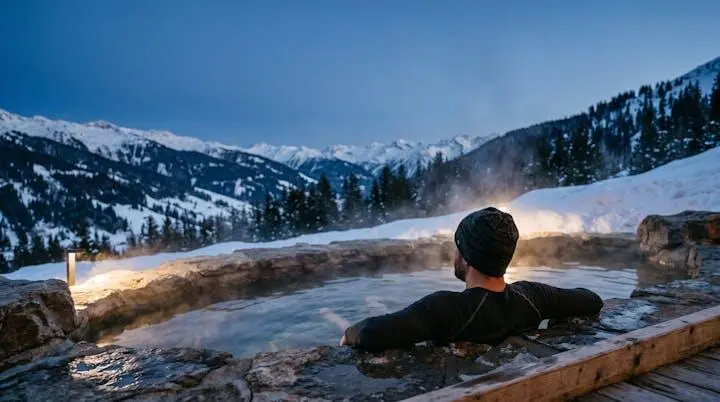
That familiar, deep ache in your quads after a day of carving down pristine slopes is often seen as a badge of honour. For many skiers, the default solution is a long, hot soak in a hotel bath or a casual dip in the resort’s hot tub. But what if that approach is leaving significant recovery potential on the table? While any warmth feels good on tired muscles, the difference between a simple hot bath and a therapeutic thermal spa session is the difference between passive comfort and active, targeted recovery. Most skiers use these powerful facilities recreationally, missing out on the physiological benefits that can dramatically reduce Delayed Onset Muscle Soreness (DOMS) and prepare the body for the next day’s runs.
The common wisdom to “just get hot” overlooks the nuanced science of hydrotherapy. The key to unlocking genuine muscle recovery isn’t just about heat; it’s about a deliberate protocol involving temperature contrast, mineral action, and pressure. The secret lies in understanding that a thermal spa is not just a big hot tub. It is a multi-tool recovery system, with saunas, steam rooms, and mineral pools each offering unique physiological advantages. By treating a spa visit as a structured therapeutic session rather than a casual aprés-ski activity, you can actively accelerate muscle repair, flush out metabolic waste, and mitigate the inflammation that causes next-day stiffness and pain.
This guide moves beyond generic advice to provide a sports therapist’s perspective on post-ski recovery. We will deconstruct the science of why thermal spas are superior to a home bath, lay out a precise protocol for your visit, and compare the specific benefits of different heat environments. We’ll also address critical safety procedures, such as how to avoid the common post-immersion dizziness, to ensure your recovery session is both effective and safe. Finally, we will put this knowledge into a broader context, showing how recovery philosophy can even inform your choice of ski resort.
This article details a complete, science-backed protocol to transform your approach to post-ski recovery. The following summary outlines the key therapeutic strategies you’ll discover to maximize muscle repair and ensure you’re ready for your next day on the mountain.
Summary: A Therapist’s Guide to Post-Ski Spa Recovery
- Why Do Thermal Spas Reduce Muscle Soreness More Than Hot Baths?
- How to Use Thermal Spas Effectively for Post-Skiing Muscle Recovery?
- Hot Pool vs Sauna vs Steam Room: Which Thermal Treatment for Leg Fatigue?
- The Temperature Transition Error That Causes Dizziness in Mountain Spas
- When Should You Visit Thermal Spas Relative to Your Skiing Day?
- What Recovery Techniques Work During Consecutive Trekking Days?
- Why Do Slow Travellers Report Higher Satisfaction Than Fast-Paced Tourists?
- How to Choose Between Colorado, Utah, and Canadian Rocky Mountain Resorts?
Why Do Thermal Spas Reduce Muscle Soreness More Than Hot Baths?
While a hot bath at home provides superficial warmth and psychological comfort, it lacks the therapeutic one-two punch of a genuine thermal spa. The primary difference lies in two scientifically-backed mechanisms: transdermal mineral absorption and hydrostatic pressure. Thermal spa water is not just hot tap water; it is rich in minerals like magnesium, calcium, and sulfur. During immersion, these minerals are absorbed through the skin, delivering a potent anti-inflammatory effect directly to the underlying tissues. This is not just theory; a clinical trial on musculoskeletal patients found that balneotherapy (mineral water immersion) triggers a measurable anti-inflammatory response that plain water simply cannot replicate.
The second factor is physics. A deep thermal pool exerts significant hydrostatic pressure on your submerged body, particularly your legs. This gentle, consistent compression acts like a full-body compression sock, pushing metabolic waste products and excess fluid from your exhausted muscles back into the circulatory system for processing. According to research on aquatic therapy, this pressure reduces swelling and eases joint stress far more effectively than the shallow depth of a home bathtub. The water’s buoyancy simultaneously unloads weight from your joints and muscles, allowing them to relax and recover in a way that is impossible on land. A home bath offers warmth; a thermal spa offers a comprehensive, multi-faceted therapeutic environment.
How to Use Thermal Spas Effectively for Post-Skiing Muscle Recovery?
Walking into a thermal spa without a plan is like entering a gym without a workout routine; you might feel busy, but you won’t achieve optimal results. To transform a recreational soak into a therapeutic session, you must follow a structured thermoregulation protocol. This involves systematically cycling through periods of heat, cold, and rest to actively pump your circulatory system, flush out lactic acid, and trigger your body’s natural recovery mechanisms. Aimless lingering in a hot pool can lead to dehydration and fatigue, whereas a structured approach maximizes the physiological benefits.
The ideal session is not a quick dip but a dedicated 2-to-3-hour commitment. This allows enough time to complete three to four full thermal cycles. Each cycle follows a specific formula: begin with 10-15 minutes of a heat modality (like a sauna, steam room, or hot pool) to increase blood flow and relax muscles. Follow this immediately with a brief but crucial 10-15 second immersion in a cold plunge pool or a cold shower. This shock constricts your blood vessels, and when you then move to the final stage—20 minutes of neutral rest—your vessels re-dilate, creating a powerful “pump” that expels metabolic waste and draws in fresh, oxygenated blood. Hydration is non-negotiable throughout this process, as is avoiding alcohol, which severely disrupts your body’s ability to thermoregulate.
Your Post-Ski Thermal Cycle Protocol
- Commit the Time: Plan for a 2-to-3-hour spa visit to allow for 3-4 full recovery cycles without rushing.
- Execute the Cycle: Follow a strict sequence of 10-15 minutes of heat, 10-15 seconds of cold, and a full 20 minutes of relaxation for each cycle.
- Hydrate Continuously: Drink water or herbal tea before, during, and after your cycles to counteract dehydration from heat and sweating.
- Refuel Post-Session: Follow your spa session with a light meal rich in protein and vegetables to provide the building blocks for muscle repair.
- Avoid Impairment: Do not consume alcohol before or during your thermal experience as it impairs thermoregulation and increases safety risks.
This structured approach is a form of active recovery. It leverages physiological principles to do more than just soothe soreness—it actively expedites the repair process. This is the difference between feeling good for a moment and feeling measurably better the next day.
Hot Pool vs Sauna vs Steam Room: Which Thermal Treatment for Leg Fatigue?
Not all heat is created equal. A well-equipped mountain spa offers a trio of thermal environments—the hot pool, dry sauna, and steam room—each with a distinct profile and primary benefit for a skier’s tired legs. Choosing the right tool for the job depends on your specific recovery goal. The hot pool’s main advantage is the combination of buoyancy and hydrostatic pressure, making it the number one choice for reducing swelling and taking the load off aching joints after a day of high-impact skiing.
The dry sauna, with its intense heat (up to 90°C) and low humidity, excels at inducing a deep sweat and providing profound muscle relaxation and joint pain relief. This intense, dry heat penetrates deeply, easing the tension in large muscle groups like the quads and glutes. Conversely, the steam room operates at a lower temperature (around 45°C) but with 100% humidity. This environment is less about intense heat penetration and more about respiratory relief—clearing sinuses affected by cold mountain air—and hydrating the skin. While it still relaxes muscles, its effect is generally considered less intense than a dry sauna for deep muscle fatigue.
As one expert cited by Equinox notes in their wellness guide, the choice can be nuanced:
More effective at reducing muscle soreness while saunas are more effective at improving cardiovascular health, however, both will provide those benefits.
– Expert cited in Equinox wellness article, Equinox, “To Steam or to Sauna?”
For targeted leg recovery after skiing, a combination is ideal: start with the hot pool to reduce initial swelling and joint load, then move to the dry sauna for deep muscle relaxation in a subsequent thermal cycle. The following table breaks down the key characteristics to help you tailor your session, based on data compiled from wellness sources like specialist sauna and spa resources.
| Environment | Typical Temperature | Humidity Level | Primary Recovery Benefit |
|---|---|---|---|
| Dry Sauna | 150-195°F (65-90°C) | 5-30% | Quick muscle recovery and joint pain relief |
| Steam Room | 110-120°F (43-49°C) | Up to 100% | Respiratory relief and skin hydration |
| Hot Pool | 100-104°F (38-40°C) | N/A (immersion) | Joint buoyancy, swelling reduction via hydrostatic pressure |
The Temperature Transition Error That Causes Dizziness in Mountain Spas
One of the most common and unnerving experiences in a thermal spa is the feeling of light-headedness or dizziness upon standing up after a long soak. This is not just a vague feeling; it’s a well-documented physiological event called orthostatic hypotension. When you are immersed in hot water, your blood vessels dilate (vasodilation) to help your body shed heat, causing blood to pool in your lower extremities. When you stand up suddenly, gravity pulls this blood downward, and your dilated vessels can’t constrict fast enough to push it back up to your brain. The result is a temporary drop in blood pressure that causes dizziness. This effect is surprisingly common; a 2023 physiology study found that this form of post-immersion hypotension occurred in 94% of middle-aged adults tested.
The “transition error” is standing up too abruptly. Fortunately, this is almost entirely preventable with a few simple, science-backed techniques. The goal is to give your cardiovascular system a moment to adjust. One of the most effective strategies is to introduce a cold stimulus just before standing. Research published in the National Library of Medicine shows that cooling the face with a splash of water can significantly reduce dizziness. Another proven method is to keep your arms submerged in the hot water rather than resting them on the cool pool edge, as this simple act was shown to mitigate dizziness severity. The most important technique, however, is mechanical: always rise slowly, pausing for a moment in a seated position on the pool edge before standing fully upright. This allows your body’s blood pressure to stabilize, preventing the head-rush and ensuring your spa experience remains purely therapeutic.
When Should You Visit Thermal Spas Relative to Your Skiing Day?
The timing of your spa visit is as critical as the protocol you follow within it. The primary goal of a post-ski spa session is to combat Delayed Onset Muscle Soreness (DOMS), the peak of which typically occurs 24-48 hours after strenuous exercise. Therefore, the optimal window for a therapeutic spa visit is in the late afternoon or evening, immediately after you finish skiing for the day. This allows you to intervene right away, using the thermal cycles to flush out metabolic byproducts, reduce micro-inflammation in the muscle tissue, and deliver a fresh supply of oxygen and nutrients to begin the repair process as soon as possible.
Waiting until the next day means you are fighting soreness that has already set in. An immediate session acts as a preventative measure. It’s also important to listen to your body before entering the spa. You should wait until your heart rate has returned to a stable, resting level after the physical exertion of your last run. Going from an elevated heart rate on the slopes directly into a hot environment can put unnecessary strain on your cardiovascular system. A 2-3 hour session is ideal, as this allows for the recommended 3-4 full thermal cycles needed for a tangible therapeutic effect. For those on a multi-day ski trip, consider a second, shorter visit the following morning to help ease any residual stiffness and prime the muscles for another day of activity.
The effects of timely recovery interventions can be long-lasting. While focused on massage, science-backed recovery research shows that even very short recovery sessions can have extended benefits, with some studies demonstrating a reduction in DOMS symptoms for up to 72 hours. Applying this principle to thermal therapy underscores the value of a timely, well-executed spa visit.
What Recovery Techniques Work During Consecutive Trekking Days?
While a high-tech mountain spa isn’t typically found on a multi-day trekking route, the core principles of recovery remain the same: reduce inflammation, promote circulation, and manage muscle fatigue. Trekkers can apply the same therapeutic logic using low-tech, natural methods. The most powerful tool available is often a cold mountain stream. Immersing feet and ankles in frigid water for 5-10 minutes is a highly effective form of cryotherapy. This intense cold causes vasoconstriction, which dramatically reduces swelling and inflammation in the most heavily impacted joints and tissues after a long day of hiking.
The “rest” and “heat” components of the spa cycle can be adapted as well. The “rest” phase is your evening at camp, but it should be active. Gentle, targeted stretching for the calves, hamstrings, and hip flexors is crucial. This acts as a form of mechanical “flushing,” helping to prevent muscles from seizing up overnight. The “heat” component is less about external application and more about internal generation and retention. Changing into dry, warm layers immediately upon stopping for the day is critical to keep core temperature stable and muscles pliable. A warm meal and hot drink also contribute to this, providing metabolic heat and the necessary nutrients for repair. The trekking equivalent of a spa protocol is: hike, cold water immersion, stretch and change into warm clothes, then refuel and rest.
This approach emphasizes that effective recovery is about understanding physiological principles, not just having access to fancy equipment. Whether it’s a cold plunge pool or a glacial stream, the goal is to manage inflammation and promote healing, ensuring you can perform day after day.
Why Do Slow Travellers Report Higher Satisfaction Than Fast-Paced Tourists?
The concept of “slow travel”—prioritizing depth of experience over breadth of sightseeing—holds a powerful lesson for physical recovery. Slow travellers report higher satisfaction because they allow for genuine connection and absorption, avoiding the stress and superficiality of a rushed itinerary. This exact principle applies to using a thermal spa. The “fast-paced tourist” of the spa world is the person who rushes in for a 20-minute dip in the hot tub, ticks the box, and leaves. They experience a fleeting moment of warmth but miss the profound therapeutic benefits.
The “slow traveller,” in contrast, is the individual who commits to the full 2-3 hour thermal protocol. They are not just visiting the spa; they are inhabiting it. By mindfully progressing through each hot, cold, and rest cycle, they are engaging in a deep conversation with their own physiology. This deliberate, unhurried process allows the body’s systems the time they need to respond: for blood vessels to dilate and constrict, for metabolic waste to be flushed, for anti-inflammatory minerals to be absorbed, and for the nervous system to shift from a “fight or flight” state to one of “rest and digest.”
This “slowing down” is not a luxury; it is a prerequisite for effective recovery. The satisfaction reported by slow travellers comes from a sense of genuine restoration and connection, not just a checklist of sights seen. Similarly, the skier who adopts a “slow spa” mentality will leave not just feeling warm, but measurably restored, with reduced soreness and an enhanced readiness for the next day. The higher satisfaction comes from a better outcome: true physiological recovery.
Key takeaways
- Recovery is not passive; it requires a structured protocol of hot, cold, and rest cycles to be truly effective.
- The specific environment matters: use hot pools for swelling, saunas for deep muscle pain, and steam rooms for respiratory relief.
- Safety is paramount: prevent dizziness by rising slowly and using techniques like facial cooling to manage blood pressure changes.
How to Choose Between Colorado, Utah, and Canadian Rocky Mountain Resorts?
When choosing a ski destination, skiers typically weigh factors like snow quality, terrain variety, and village atmosphere. However, for those serious about performance and longevity on a multi-day trip, it’s time to add another critical criterion: the resort’s recovery philosophy and facilities. The choice between a resort in Colorado, Utah, or the Canadian Rockies can also be a choice between vastly different approaches to wellness, which can significantly impact your physical experience.
A resort’s spa and wellness offerings are a direct reflection of its character. Some, like many in the Colorado Rockies, have cultivated a high-end, facility-driven recovery culture, integrating state-of-the-art technology and luxury amenities directly into the resort experience. Others, particularly in certain areas of the Canadian Rockies or more rustic parts of Utah, might offer a more nature-based wellness experience, centered around natural hot springs or a more minimalist, Scandinavian-style spa philosophy.
Case Study: Vail’s High-Tech Recovery Culture
A survey of top North American ski resort spas highlights how the RockResorts Spa at The Arrabelle in Vail, Colorado, exemplifies a commitment to innovation and eco-conscious luxury. Its 10,000-square-foot space, featuring an integrated fitness center, whirlpool, steam room, and dry sauna, illustrates a tech-and-amenity-forward wellness personality. This stands in contrast to the more rustic, nature-based hot springs experiences found elsewhere, showcasing how a resort’s identity is deeply tied to its recovery offerings.
Therefore, the decision should be guided by your personal recovery priorities. Do you want access to a comprehensive, high-tech facility with every modality under one roof? Or do you prefer a more tranquil, natural setting? Evaluating a resort’s spa brochure and wellness programming with the same scrutiny you apply to its trail map will ensure your chosen destination supports not only your skiing ambitions but also your body’s crucial need to recover.
Now that you are equipped with the science and strategy for therapeutic recovery, the next logical step is to apply this knowledge by choosing a destination that aligns with your wellness goals. Evaluate your next ski resort not just on its peaks, but on its power to restore.