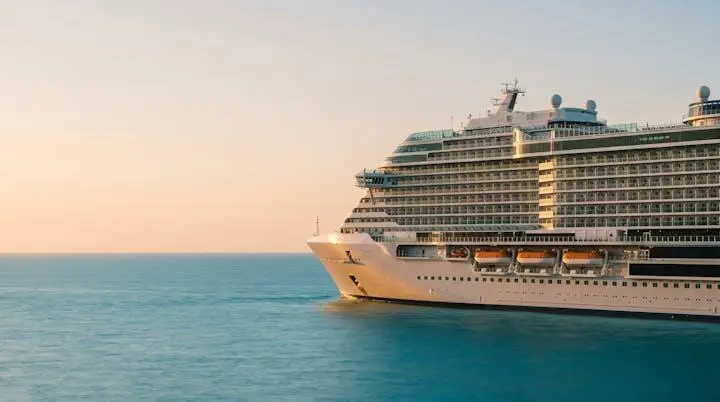
Contrary to the belief that they are just a form of transport, modern ocean liners are now floating destination resorts, but their core experience is fundamentally different from a land-based hotel.
- A cruise ship operates as a self-contained, mobile “bubble,” prioritizing frictionless convenience and variety within a compact, high-density environment.
- An all-inclusive resort is a fixed “compound,” offering more space and freedom to explore the local area, but with potentially more logistical friction.
Recommendation: Instead of asking which is “better,” determine if you prefer the self-contained ‘bubble’ of a ship or the open-gate ‘compound’ of a resort.
If the term “ocean liner” conjures images of stuffy formal dinners, shuffleboard on a windswept deck, and a rigid schedule, you’re not alone. This perception, largely shaped by the cruise industry of the 1980s, lingers in the minds of many potential travellers. You may have considered an all-inclusive resort as a more modern, flexible alternative, offering a straightforward sun-and-sand vacation. But the cruise industry has undergone a seismic transformation over the past few decades, rendering those old comparisons obsolete.
The core misunderstanding lies in viewing a modern cruise ship as merely a mode of transport. Today’s vessels are architecturally and experientially designed as destinations in themselves—vast, floating resort hotels that happen to move. This shift changes everything. The choice is no longer between a static hotel and a moving one; it’s between two fundamentally different types of resort environments. One is a highly controlled, mobile “bubble” ecosystem. The other is a sprawling, fixed “compound” with porous borders to the outside world.
This guide isn’t about declaring a winner. It’s about updating your understanding. We will deconstruct the outdated myths, explore the structural differences between these two vacation models, and equip you with the practical knowledge to analyse value, comfort, and amenities. By understanding the true nature of a modern ocean liner, you can finally make an informed choice that aligns with the vacation experience you genuinely seek.
Summary: How Do Modern Ocean Liners Compare to Floating Resort Hotels?
- Why Do Modern Ocean Liners Bear Little Resemblance to 1980s Cruises?
- How Do Modern Ocean Liners Compare to Floating Resort Hotels?
- Ocean Liner Cruise vs All-Inclusive Resort: Which Offers Better Value for Couples?
- The Cabin Location Mistake That Ruins Sleep for Light Sleepers on Ships
- Should Your First Ocean Liner Cruise Be 4, 7, or 14 Days?
- How to Choose Cruise Ships Based on the Amenities That Actually Matter to You?
- How to Compare All-Inclusive Packages Without Falling for Hidden Exclusions?
- How to Choose Cruise Ships Based on the Amenities That Actually Matter to You?
Why Do Modern Ocean Liners Bear Little Resemblance to 1980s Cruises?
The cruise ship of today is a different species from its predecessors. The most significant evolution isn’t the size, but the philosophy. They are no longer just ferries between exotic ports; they are the destination. This conceptual shift was enabled by massive leaps in naval engineering. For instance, the persistent fear of seasickness, a valid concern on older ships, has been largely neutralised. A key reason is that modern stabilizer systems now cut rolling motion by up to 90%, creating a remarkably stable platform that feels more like a land-based hotel than a boat.
This stability allowed architects to think vertically and outwardly, creating spaces that were previously unimaginable at sea. The focus shifted from merely transporting passengers to entertaining them within a self-contained world. Expansive pool decks, multi-story atriums, and a vast array of dining and entertainment venues became the standard. The ship itself, with all its features, is now the main attraction, while the ports of call are often treated as secondary excursions. This is a complete reversal of the 1980s model, where the ship was a means to an end.
This evolution has transformed the passenger experience from a passive journey to an active stay. You are no longer just a traveller; you are a guest at a floating resort. The daily experience is less about staring at the horizon and more about choosing between a rock-climbing wall, a Broadway-style show, or a dozen different restaurants. This fundamental change is why any comparison based on outdated notions of cruising is bound to be flawed.
How Do Modern Ocean Liners Compare to Floating Resort Hotels?
To make a meaningful comparison, we must move beyond a simple list of amenities and instead analyse the “experience architecture” of each vacation type. The most effective way to conceptualise this is by thinking of a cruise ship as a self-contained ‘Bubble’ and an all-inclusive resort as a sprawling ‘Compound’. Each model has inherent strengths and weaknesses that shape your entire trip, from your morning coffee to your evening entertainment.
The ‘Bubble’ ecosystem of an ocean liner is defined by its high density and mobility. Everything is compact and centrally located, designed for a frictionless experience. You are never more than a short elevator ride away from a meal, a show, or a pool. The ‘Compound’ model of a resort, by contrast, is defined by its fixed location and larger footprint. As one traveller noted after a resort stay, “it was almost a mile walk to get from our room to the buffet,” a type of “spread-out fatigue” that is rare on a ship. This table breaks down the key structural differences that flow from this core distinction.
This comparison, as outlined in a recent analysis of the two vacation types, highlights the fundamental trade-offs.
| Dimension | Ocean Liner (The ‘Bubble’) | All-Inclusive Resort (The ‘Compound’) |
|---|---|---|
| Mobility | Ship moves between multiple destinations on one trip | Static location for entire stay |
| Weather flexibility | Route can be altered to avoid storms | No option to relocate if weather turns |
| Onboard activity variety | Rope courses, water parks, rock climbing, simulators | Similar activities but confined to one property |
| Local access | Brief, curated port stops (hours only) | Extended, freer access to surrounding area |
| Space per guest | Compact cabins, high density | Larger rooms, more spread-out grounds |
Ultimately, the choice is not about which is superior, but which environment you prefer. Do you value the seamless, all-in-one convenience of the ‘Bubble,’ even if it means more structured access to the outside world? Or do you prefer the freedom and space of the ‘Compound,’ even if it requires more effort to navigate and explore?
Ocean Liner Cruise vs All-Inclusive Resort: Which Offers Better Value for Couples?
The question of “value” is often the central point of debate, but direct comparisons can be misleading without understanding what is and isn’t included. At first glance, the base fare for a cruise often appears significantly cheaper than a week at an all-inclusive resort. However, the cruise industry has perfected the art of a la carte pricing. The initial price is just a starting point, with many of the amenities that are standard at a resort—like drinks and gratuities—coming at an additional cost.
To make a true apples-to-apples comparison, you must factor in the “all-in” cost. This means adding the price of an unlimited drink package and the automatic daily gratuities to the cruise fare. When you do this, the financial gap between the two options often narrows considerably, though the cruise frequently remains a strong value proposition. Consider the following breakdown for a hypothetical 4-night stay for a couple, which is based on real-world cost analysis.
| Item | 4-Night Cruise (2 people) | 4-Night All-Inclusive Resort (per person) |
|---|---|---|
| Base fare | $500 total ($250/person) | $750/person (all-in) |
| Unlimited drink package | +$60/day/person | Included |
| Gratuities | +$14.50/day/person | Included |
| Estimated total per person | ≈$558 | ≈$750 |
In this scenario, the cruise still comes out ahead financially, even after adding the extras. However, this doesn’t account for other potential onboard spending, such as specialty dining, casino play, or spa treatments. The key takeaway is that a cruise offers more control over the final cost. If you are not a heavy drinker or are content with the included dining options, your final bill could be significantly lower than at a comparable resort. Conversely, a resort offers more cost certainty; once you’ve paid, there are fewer temptations for additional spending. The “better value” depends entirely on your consumption habits.
The Cabin Location Mistake That Ruins Sleep for Light Sleepers on Ships
On a modern ocean liner, your cabin is your sanctuary. But not all sanctuaries are created equal. The single biggest mistake a first-time cruiser can make—especially a light sleeper—is assuming that all cabins in the same category offer the same experience. A room’s location on the ship is arguably more important than its size or whether it has a balcony. The “Bubble” ecosystem, for all its convenience, is a dense, 24/7 city, and your cabin’s proximity to its noisy districts can make or break your rest.
As one expert notes, even on the most advanced ships, “a room directly beneath a nightclub, pool deck, or buffet can still suffer from noise.” This isn’t just about late-night music; it’s about the scraping of deck chairs during early morning cleaning, the rolling of carts from the galley, or the constant low-frequency hum from engines or generators. The key to a peaceful cruise is to study the deck plan not as a map, but as a sound profile. You want to find a cabin that is insulated on all six sides—above, below, and to each side—by other passenger cabins. This creates a “quiet cocoon” buffered from the ship’s operational and entertainment zones.
Before you book, become a detective. Pinpoint the locations of theatres, casinos, bars, kitchens, and the anchor mechanism. Avoid any cabin directly adjacent to, above, or below these areas. This simple act of due diligence is the most effective way to ensure your floating resort experience is restful and restorative.
Your Action Plan: The Quiet-Cabin Audit
- Map the Noise Hotspots: Obtain the ship’s deck plans and highlight all public venues that generate noise—theaters, casinos, nightclubs, bars, and main dining rooms.
- Analyze Vertical Adjacency: For a prospective cabin, check the deck plans for the floors directly above and below. Avoid being under the lido deck (pool), buffet, or sports court, where you’ll hear chairs dragging at dawn.
- Check Fore and Aft Positions: Steer clear of cabins situated very low and far forward, which can be noisy during docking due to anchor and thruster operation. Similarly, rooms in the aft can sometimes experience vibrations from the ship’s propulsion systems.
- Build a ‘Cabin Cocoon’: The ideal location is a cabin surrounded by other cabins on all sides—above, below, and next to you. This is the single most effective strategy for ensuring quiet.
- Cross-Reference with Past Cruiser Reviews: Use online cruise forums to search for your specific ship and cabin number or area. Past passengers are often brutally honest about specific noise issues they encountered.
Should Your First Ocean Liner Cruise Be 4, 7, or 14 Days?
For a first-time cruiser, choosing the right trip duration is a critical decision that balances the desire for a full experience against the fear of commitment. Committing to a 14-day voyage without knowing if you’ll enjoy the “Bubble” lifestyle is a significant gamble. Conversely, a short 3- or 4-day cruise might not provide enough time to truly settle in and explore all the ship has to offer, especially on the largest vessels. The industry has, through decades of trial and error, landed on a “gold standard” for first-timers.
The seven-night cruise is widely considered the ideal length for a first voyage. This duration provides a perfect balance. It’s long enough to experience a few sea days (to enjoy the ship) and a few port days (to explore destinations), allowing you to understand the rhythm of cruise life. You have time to try different restaurants, see a variety of shows, and overcome the initial learning curve of navigating a massive ship without feeling rushed or overwhelmed. This isn’t just anecdotal advice; industry data shows that cruise trips typically last about 7.1 days on average, confirming that the one-week model hits a sweet spot for the majority of travellers.
Shorter cruises (3-5 nights) can be an excellent “taster” to see if you like the general concept, but be aware they often attract a more party-focused crowd and may not be representative of a typical week-long sailing. Longer cruises (10+ days) are generally best left for experienced cruisers who already know they love life at sea and are looking to explore more remote itineraries. For your first time, sticking to the seven-day format is the safest and most reliable way to get a true and enjoyable introduction to the world of modern cruising.
How to Choose Cruise Ships Based on the Amenities That Actually Matter to You?
Once you’ve decided to try a cruise, the sheer number of options can be paralyzing. The key is to understand that cruise lines are not interchangeable. Each brand cultivates a distinct personality, or “DNA,” designed to appeal to a specific type of traveller. Choosing the right ship isn’t about finding the one with the longest list of amenities; it’s about matching the ship’s personality to your own. A ship packed with high-energy activities like waterslides and ropes courses will be a poor fit if you’re seeking quiet relaxation.
Another critical concept is “amenity density.” It’s not enough to know a ship has three pools. You need to know it has three pools for how many people? The world’s largest cruise ship carries a capacity for approximately 7,600 passengers, which puts a very different pressure on facilities compared to a smaller luxury ship with 500 guests. The table below, based on expert analysis of cruise line branding, offers a starting point for decoding this DNA.
| Cruise Line | Ideal Traveler Profile | Onboard Personality |
|---|---|---|
| MSC Cruises | High-energy families and international travelers | Resort-style megaships, shopping promenades, water parks |
| Norwegian Cruise Line | Solo travelers | Purpose-built studio cabins and dedicated social lounge |
| Virgin Voyages | Young adults and childfree groups | Late-night entertainment, boutique lifestyle-hotel feel |
| P&O Cruises (Aurora) | Classic traveler seeking calm routine | Traditional, serene, fixed dining, enrichment lectures |
| Oceania / Viking | ‘Value luxury’ seekers | Smaller ships, refined dining, curated premium feel |
Instead of being dazzled by the “biggest” or “newest” ship, start by defining your ideal vacation atmosphere. Do you want high energy or low-key relaxation? Are you travelling with kids or seeking an adults-only environment? Answering these questions first will narrow the field dramatically and lead you to the amenities—and the ship—that truly matter to you.
How to Compare All-Inclusive Packages Without Falling for Hidden Exclusions?
The term “all-inclusive” is a powerful marketing tool, promising a utopian vacation where your wallet can be locked away. However, as travel experts from AAA caution, “the label ‘all-inclusive’ can prove a bit misleading sometimes.” The reality is that many resorts have a tiered system of inclusivity, with a host of potential surcharges lurking in the fine print. Comparing packages requires an auditor’s mindset to uncover what’s truly included versus what’s merely “available” for an extra fee.
The most common culprits are premium services. The standard package might cover well liquor, but not the top-shelf brands or a freshly pulled espresso. It might include the buffet, but not the romantic beachfront restaurant. Beyond food and drink, look out for fees for motorized water sports, spa access, premium beach chairs or cabanas, and even Wi-Fi. Perhaps most frustrating are the mandatory resort fees, which are rarely included in the advertised price. These hidden resort fees can run about $20 to $50 a night, quietly inflating the total cost of your “all-in” vacation.
To avoid unpleasant surprises at checkout, you must perform an “asterisk audit” before you book. Get written confirmation on every potential exclusion and assume nothing is included unless it is explicitly stated in your booking documents. A truly all-inclusive experience is wonderful, but it’s your responsibility to verify that the promise matches the reality.
Action Plan: Your ‘Asterisk Audit’ for All-Inclusives
- Scrutinize the Transfers: Verify in writing whether roundtrip airfare and, more commonly, airport-to-resort transfers are genuinely part of the package price or an optional add-on.
- Map the Dining Exclusions: Get a list of all restaurants on the property. Confirm which are included in your package and which—like specialty, a la carte, or “special event” venues—will incur an extra charge.
- Clarify the Beverage Tiers: Ask for the specific drink policy. Does “included drinks” cover premium liquor, imported beer, bottled water, and specialty coffees like espresso and cappuccinos? Often, they do not.
- Audit Activity and Amenity Fees: Inquire about specific extra fees for resort offerings such as spa treatments, fitness classes, golf green fees, motorized water sports, and reserving poolside cabanas or premium beach loungers.
- Confirm the Tipping Culture: Even at “no-tipping” resorts, gratuities are often expected for specific services like spa treatments, concierge help, or private dinners. Clarify the official policy and common practices to budget accordingly.
Key Takeaways
- Modern ocean liners are floating resorts, not just transport, thanks to technology that makes them incredibly stable.
- The core choice is between a ship’s convenient, high-density ‘Bubble’ and a resort’s spacious, open-gate ‘Compound’.
- To compare value, you must calculate the “all-in” cost of a cruise by adding drink packages and gratuities to the base fare.
How to Choose Cruise Ships Based on the Amenities That Actually Matter to You?
Ultimately, the process of choosing the right cruise ship is an exercise in self-awareness. After deconstructing the myths and understanding the financial realities, the final step is to look inward. The modern cruise industry is incredibly diverse, with ships designed to cater to nearly every imaginable taste. The challenge is not a lack of options, but a surplus of them. The secret to navigating this is to ignore the marketing hype and focus on the fundamental “personality” of each cruise line.
Start by asking what you want to *feel* on your vacation. Energized and social? Calm and secluded? Intellectually stimulated? The answers will guide you. A line like Virgin Voyages, which targets a younger, child-free demographic with late-night entertainment, offers a vastly different experience than a line like Viking, known for its smaller ships and focus on cultural enrichment. It’s not about which is better, but which is better *for you*.
Consider the scale you’re comfortable with. While the average cruise ship can host around 3,000 passengers, the largest “mega-ships” can feel like bustling cities, while smaller luxury vessels offer a more intimate, boutique hotel atmosphere. By matching the ship’s scale and personality to your own vacation goals, you transform a confusing choice into a clear path toward the perfect trip.
Begin by defining your ideal vacation atmosphere, and use that as a filter to explore the cruise lines that truly align with your travel style.