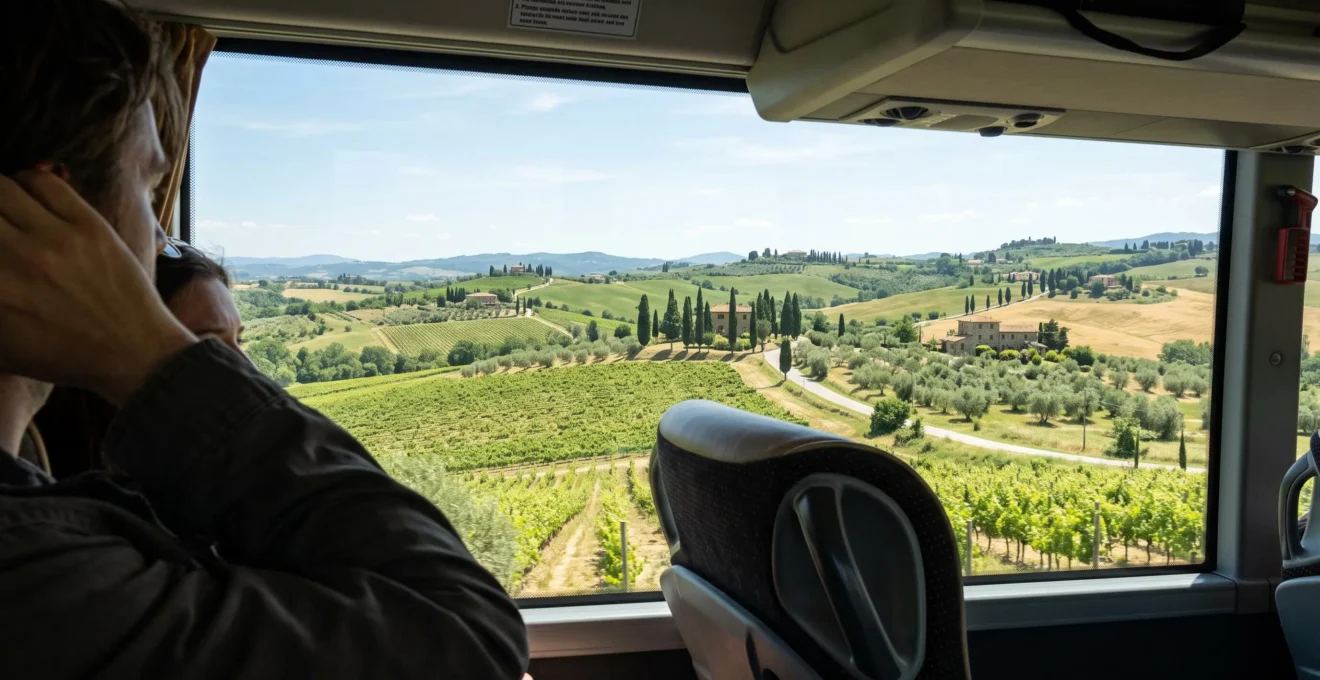
Renting a car in Tuscany sounds liberating until you discover the invisible minefield of restricted traffic zones, the daily hunt for legal parking spots, and the stress of navigating narrow medieval streets built centuries before modern vehicles. The reality hits when that €200 camera-enforced fine arrives three months after your trip, charging you for a ZTL violation you never even noticed. There’s a smarter route to exploring Florence, Pisa, Siena, Lucca and San Gimignano without the driving anxiety or hidden costs that derail so many Tuscan adventures.
Your Tuscany bus travel snapshot
- 5 iconic cities accessible: Florence, Pisa, Siena, Lucca and San Gimignano
- 2 color-coded routes (Green and Terracotta) with unlimited travel during pass validity
- Passes available in 1, 2, 3 or 5 day options from €34.30 with current promotion
- Includes guided walking tours and mobile audio guide app at no extra cost
- Zero risk of ZTL fines, parking fees or navigation stress
The appeal of Tuscany continues to grow stronger. The latest IRPET Tourism Report for Tuscany confirms the region saw arrivals increase by 5.9% in 2024 compared to the previous year, with international visitors driving this surge toward Renaissance capitals and medieval hilltowns. What many first-time travelers don’t realize is that the traditional car rental approach creates more problems than it solves, particularly when your destination list includes historic centers with increasingly strict traffic controls.
Why skip the car rental stress in Tuscany
The car rental counter at Florence Airport presents an attractive pitch about freedom and flexibility. In practice, that freedom dissolves the moment you approach any historic center and encounter the reality of ZTL zones — Zona Traffico Limitato, or restricted traffic areas that blanket the heart of every major Tuscan city. These aren’t marked with obvious barriers or warning signs that foreign drivers recognize. Cameras positioned at zone entrances automatically photograph your license plate the instant you cross an invisible boundary, with fines typically reaching several hundred euros per violation.
Private cars account for 93.4% of CO₂ emissions from tourism-related road travel in Italy, as ISPRA environmental data on tourist road emissions shows. Choosing collective transport over individual vehicles directly reduces your carbon footprint while touring the region, aligning with the sustainable travel preferences many visitors now prioritize for 2026.
Beyond the financial and environmental factors, there’s the simple matter of stress reduction. Navigating unfamiliar roads, deciphering Italian parking signs, worrying about vehicle security in overnight stops, and managing highway toll payments all consume mental energy better spent enjoying the destinations themselves.
When car rental still makes sense. Bus travel suits city-hopping itineraries perfectly, especially for solo travelers and couples focusing on Tuscany’s historic centers. However, travelers staying in remote agriturismos outside bus routes, those with mobility challenges requiring door-to-door transport, or groups of four or more passengers (where per-person car costs drop significantly) may find rental vehicles more practical despite ZTL complexities. The bus advantage is strongest when your accommodation and priorities align with the urban route network.
How does a Tuscany Bus Travel Pass connect Tuscany’s highlights?
When you visit Tuscany with Tootbus, the network operates two distinct color-coded routes that together connect all five major destinations most travelers want to see. The Green route handles northern Tuscany, linking Florence with Pisa and Lucca in a triangle that makes sense for travelers prioritizing the Leaning Tower and the region’s best-preserved Renaissance walls. The Terracotta route covers the southern arc, connecting Florence with Siena and San Gimignano — the medieval hilltop destinations known for intact towers and Gothic architecture.

Florence serves as the central hub for both routes, which means you can base yourself there and make day trips outward, or move between cities and use different departure points depending on your accommodation strategy. Passes are available in four duration options to match different trip lengths: one-day passes work for travelers squeezing in a quick Pisa visit from a Florence base, while two or three-day passes suit the typical Tuscany extension of a broader Italy itinerary. The five-day option makes sense for visitors treating the region as their primary destination, allowing a more relaxed pace with potential repeat visits to favorite cities.
What your Travel Pass includes beyond bus seats
The pass covers more than simple transport between cities. Guided walking tours in select destinations are included in the ticket price, typically meeting at central points after bus arrival. The mobile audio guide app provides commentary for independent exploration, with downloadable content that works offline once installed. During the validity period marked on your pass, you can board any scheduled departure on either route without booking individual journeys or worrying about capacity limits on standard services.
Current pricing starts at 34.30 € for the one-day option during the promotional period running through spring 2026, with longer durations offering progressively better per-day value. The system operates on a hop-on, hop-off principle during operating hours, meaning you’re not locked into specific departure times booked weeks in advance. If you finish exploring Siena earlier than expected, you can catch an earlier return bus without penalty or rebooking fees.
The 2025 open-air tourism count published by Florence Daily News highlights visitor satisfaction reaching a Net Promoter Score of 69.2, the highest level recorded in five years — suggesting that travelers who solve the transport equation successfully tend to rate their overall experience very positively.
Typical scenario: The hidden cost calculation
A couple planning their first four-day Tuscany trip books a compact car for €280, excited about the flexibility. On day one in Florence, they spend forty minutes circling for legal parking outside the ZTL perimeter, eventually finding a spot charging €26 for the day. In Siena, they accidentally enter the restricted zone while following GPS directions, generating a violation they won’t discover until the rental company charges their card weeks after returning home. By the end of their trip, the car rental has cost over €480 when you add fuel, parking fees across four cities, and the inevitable ZTL fine — compared to a 3-day unlimited bus pass that would have covered all their planned destinations for a fraction of that total.
The 5 iconic cities your pass unlocks
The route network focuses deliberately on Tuscany’s most accessible and visitor-friendly destinations rather than attempting comprehensive regional coverage. These five cities represent the experiences most first-time visitors prioritize: Renaissance art capitals, medieval hilltop character, and the walled city preservation that makes the region architecturally unique across Italy.
Florence operates as the natural starting point for most Tuscany explorations, home to the Uffizi Gallery’s unmatched collection and Brunelleschi’s dome dominating the skyline. The concentration of world-class museums, churches and palazzos here justifies multiple days if your schedule allows. Pisa serves a different function in most itineraries — the Piazza dei Miracoli cluster containing the Leaning Tower, baptistery and cathedral can be thoroughly experienced in a half-day visit, making it ideal for a morning departure from Florence with an afternoon return.
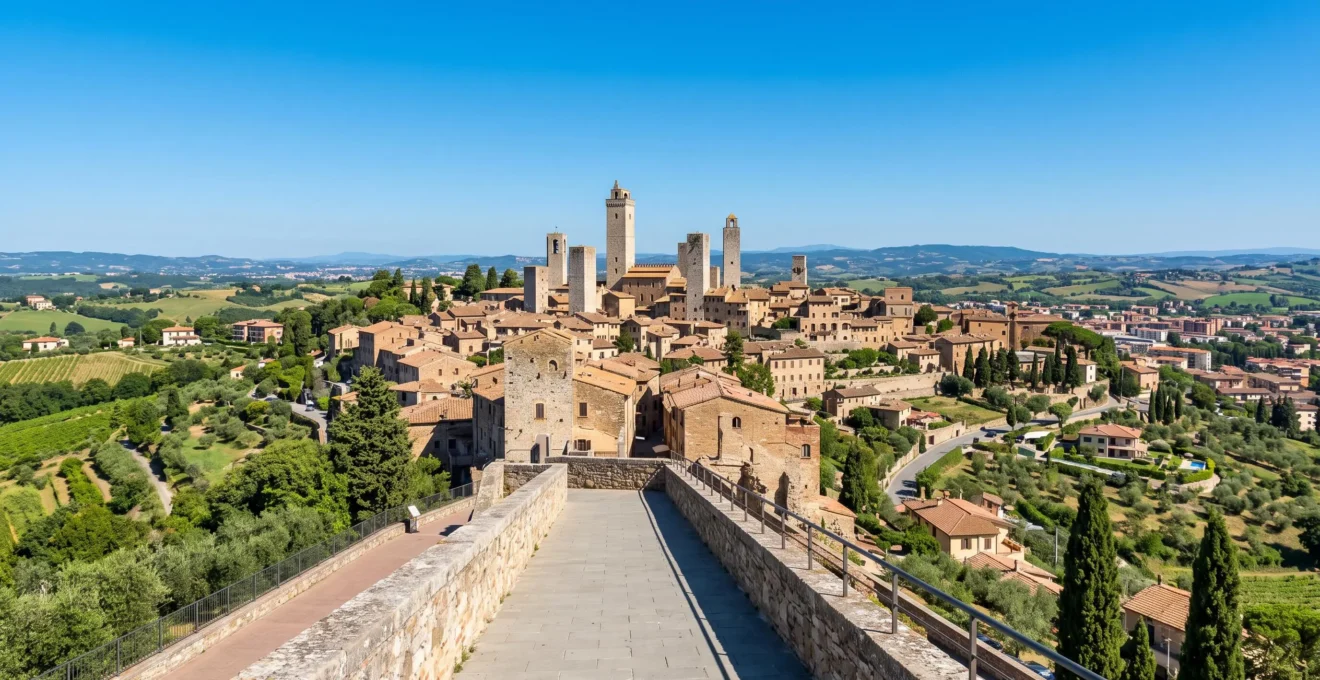
Siena presents the best-preserved medieval city center in Tuscany, built around the sloping shell-shaped Piazza del Campo where the famous Palio horse race occurs twice each summer. The Gothic cathedral and the remarkable state of preservation throughout the historic center make this a full-day destination minimum. San Gimignano earns its “Medieval Manhattan” nickname from the fourteen surviving towers, built by competing families as symbols of wealth and power during the Middle Ages. The hilltop location offers expansive countryside views, and the compact historic center typically holds visitors for three to four hours.
Lucca stands apart from Tuscany’s other major destinations through its perfectly intact Renaissance walls, wide enough on top to form a tree-lined park encircling the entire historic center. The flat terrain makes this the region’s most bicycle-friendly city, with rental shops clustered near the walls. The amphitheater-turned-piazza, the cathedral with its famous carved facade, and the general lack of overwhelming tourist density create a more relaxed atmosphere that rewards a slow afternoon of exploration.
Choosing your pass duration (1, 2, 3 or 5 days)
The duration decision comes down to three variables working in combination: total days you’re spending in Tuscany, which cities rank as your absolute priorities, and whether you prefer concentrated efficient touring or a more spacious schedule with flexibility for spontaneous decisions.
- You have 2-3 days in Tuscany:
Choose the 1-day or 2-day pass. Focus on Florence as your base with one or two day trips to your top priorities (Pisa for the tower, or Siena for medieval atmosphere). Trying to hit all five cities in this timeframe turns the trip into a transportation marathon rather than an actual experience of the places.
- You have 4-5 days in Tuscany:
The 3-day pass offers the best balance. Strategic route planning lets you visit all five cities across three travel days, with remaining days for deeper Florence exploration or rest between trips. Alternate between Green and Terracotta routes to avoid repetitive journeys.
- You have 6-7 days in Tuscany:
Consider the 5-day pass for maximum flexibility. This duration allows repeat visits to cities you particularly enjoyed, participation in multiple walking tours, and the freedom to adjust plans based on weather or energy levels without worrying about wasted ticket value.
- You have a week or more with a flexible itinerary:
The 5-day pass delivers maximum value per journey with no pressure to rush. You can explore at a genuinely slow pace, return to favorite spots for different times of day, and treat the bus network as genuine unlimited travel rather than a fixed number of planned trips.
Price consciousness sometimes pushes travelers toward shorter passes with plans to “make every day count,” but this often backfires. Three intensive back-to-back travel days exhaust most people more than five relaxed exploration days with built-in recovery time. The per-day cost drops significantly as duration increases, and the fatigue factor of aggressive scheduling rarely proves worth the modest savings.
The comparison below breaks down each pass option by trip profile, realistic city coverage, and value threshold to help you match duration to your actual travel style.
| Pass option | Best suited for | Cities realistically covered | Typical use pattern |
|---|---|---|---|
| 1-day pass | Florence-based visitors with limited time | 1-2 cities (Florence plus one other) | Single focused day trip |
| 2-day pass | Short Tuscany extensions (3-4 day trips) | 3 cities (Florence plus one per route) | One Green route day, one Terracotta day |
| 3-day pass | Week-long Tuscany visits | All 5 cities possible | Alternating route days with rest days between |
| 5-day pass | Tuscany as primary destination (7 plus days) | All 5 cities with flexibility for repeats | Relaxed pace, weather backup days, spontaneous returns |
Booking and using your pass (practical steps)
The booking process operates entirely online through the official platform, eliminating the need to locate physical ticket offices after arrival or navigate Italian-language purchasing systems. Payment accepts standard international credit cards, and confirmation arrives via email immediately after transaction completion.
- Select your pass duration
Visit the official bus travel booking page and choose between 1, 2, 3 or 5 day options based on your trip length and city priorities. Check current promotional pricing, as discounts fluctuate seasonally.
- Complete the booking form
Enter travel dates, passenger count, and contact information. The system will email your confirmation with pass details and a booking reference number needed for validation.
- Download the mobile app
Install the dedicated travel app on your smartphone before departure. Download the audio guide content while you have reliable WiFi, as countryside mobile coverage can be inconsistent.
- Validate on your first journey
Show your confirmation email (printed or on phone) to the driver when boarding your first bus. They will activate your pass, which then remains valid for consecutive days matching your purchased duration.
- Board freely during validity period
After initial validation, simply board any bus on either route during your pass validity window. Keep confirmation handy for driver verification, though most will recognize regular pass holders after the first day.
Morning departures from Florence typically offer the most strategic timing, getting you to destination cities by mid-morning and allowing a full exploration day before return buses in late afternoon or early evening. Weekend schedules sometimes reduce departure frequency, so verify current timetables when planning Saturday or Sunday travel days.
- Download the audio guide app and content while connected to hotel WiFi
- Check the first departure time from your starting city and locate the pickup point
- Charge your phone fully — you’ll need it for confirmation, audio guide, and photos
- Plan your return journey timing to avoid getting stranded after last departure
- Bring water and snacks for travel days — buses have limited onboard services
- Screenshot or print your confirmation as backup if phone battery dies
The most effective multi-city strategies involve choosing accommodation based on which route you’re emphasizing. Florence works for travelers splitting time between both routes. Siena makes sense as a base if you’re prioritizing the Terracotta route cities and want a less touristy evening atmosphere than Florence offers. Lucca serves travelers focusing on northern destinations with less interest in the southern medieval hilltowns. Rather than hauling luggage between cities daily, commit to a base for your full stay and use the pass for day trips that return you to the same accommodation each evening.