Your Tuscany essentials in 30 seconds:
- Florence’s Uffizi Gallery and Duomo concentrate Renaissance masterpieces that shaped European art for centuries
- Pisa’s Piazza dei Miracoli offers four extraordinary marble monuments beyond the famous leaning tower
- Siena preserves its medieval Gothic architecture and hosts the centuries-old Palio horse race tradition
- Lucca’s intact Renaissance walls create a unique 4-kilometre circuit for walking or cycling above the historic centre
- San Gimignano retains 14 medieval tower-houses from an original 72, creating Italy’s most distinctive skyline
- Chianti’s vineyard-covered hills between Florence and Siena deliver authentic terroir experiences without requiring wine expertise
Marvel at Florence’s Renaissance masterpieces
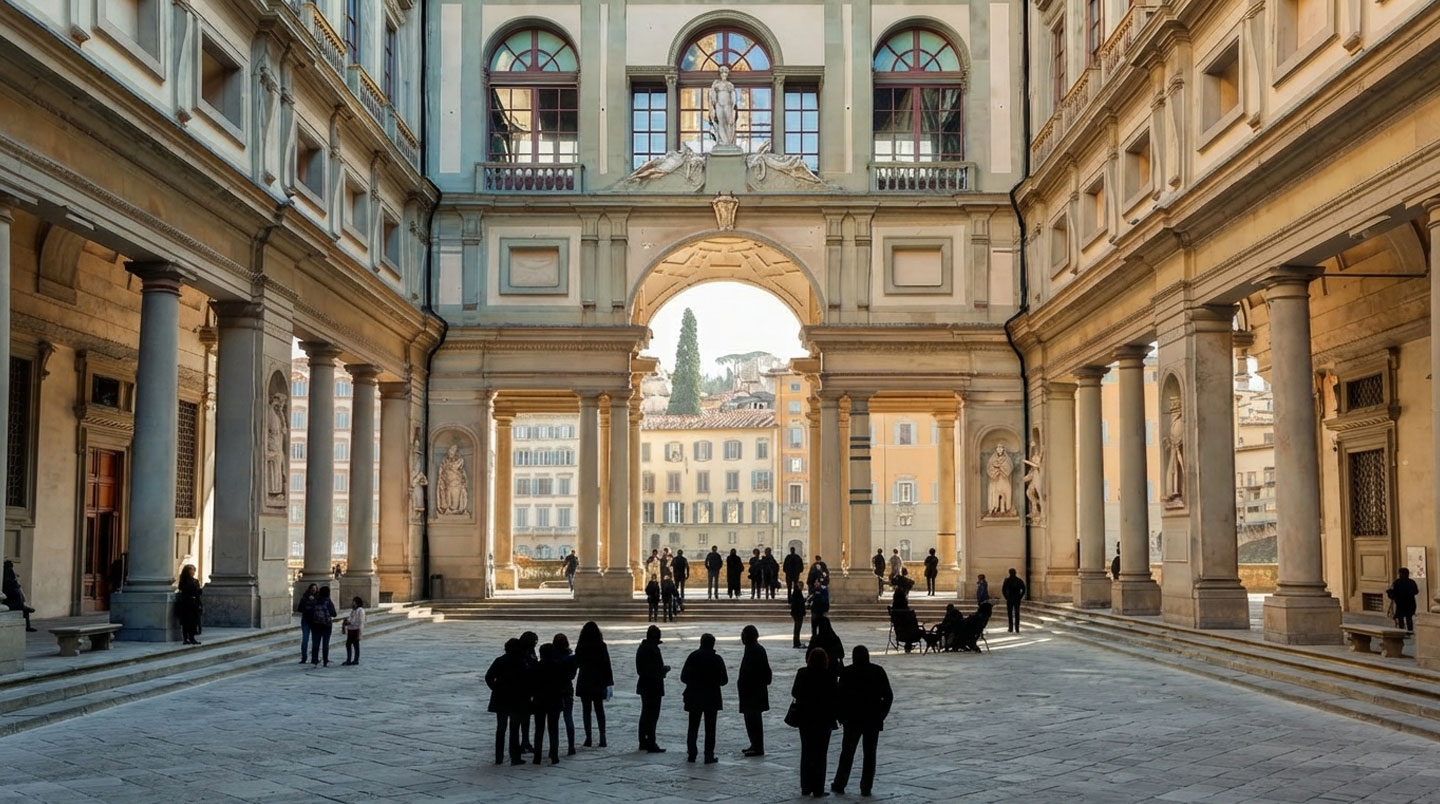
Florence earned its UNESCO World Heritage designation in 1982 as the first Tuscan city recognised for extraordinary artistic significance. The historic centre built on an Etruscan settlement became Europe’s cultural engine during the 15th and 16th centuries under Medici patronage. What makes Florence essential isn’t just the concentration of art — it’s that this single city invented visual language still used today. Brunelleschi’s dome on Santa Maria del Fiore cathedral solved engineering problems that baffled architects for generations. Michelangelo’s David at the Accademia represents human anatomy rendered in marble with precision never achieved before. Botticelli’s Birth of Venus at the Uffizi Gallery established compositional principles taught in art schools worldwide. These aren’t museum pieces preserved under glass; they’re works that fundamentally changed how humans represent reality.
The practical challenge is managing scale. The UNESCO monitoring report notes Florence registered over 15 million tourist overnight stays in 2019 — more than 20 times the city’s population of 708,000. This creates queues exceeding two hours at major museums during peak summer months. The most common mistake travelers make is attempting to see everything in a single rushed day, burning out after three hours in the Uffizi without absorbing what they’ve seen. A more effective approach treats Florence as a base requiring at least two full days: one for the cathedral complex (Duomo, Baptistery, Giotto’s Bell Tower), another for the Uffizi and Accademia, with advance timed-entry reservations essential for both galleries. Early morning slots between opening and 10:00 offer breathing room before tour groups arrive. What separates Florence from other art cities is layering — Gothic churches hide Renaissance frescoes, palazzo courtyards reveal Mannerist sculpture, neighbourhood churches contain Caravaggio altarpieces. The depth rewards slow exploration over frantic checkbox tourism.
Climb the Leaning Tower and explore Pisa’s architectural wonders
Pisa suffers from iconic monument syndrome — millions photograph the Leaning Tower without exploring the extraordinary architectural ensemble surrounding it. The entire Piazza dei Miracoli (Field of Miracles) functions as an integrated masterwork: the cathedral, baptistery, bell tower (the famous leaning structure), and monumental cemetery form a white marble complex built between the 11th and 14th centuries when Pisa dominated Mediterranean maritime trade. What makes the piazza exceptional isn’t individual buildings but spatial relationships between them, designed to guide religious processions through a sequence of architectural experiences. The baptistery’s acoustics create a 30-second echo when voices hit specific notes. The cathedral’s bronze doors depict biblical scenes with detail rivaling manuscript illumination. The tower itself leans 3.97 degrees off vertical — not by design but due to soft ground subsidence that began during construction in 1173, creating the engineering marvel that ironically made it more famous than perfectly vertical contemporaries.
Reaching Pisa from Florence or Siena raises the question most Tuscany itineraries ignore: transport logistics between cities without car rental. Standard advice assumes either expensive private transfers or confusing train connections requiring multiple changes. For travelers exploring multiple Tuscan cities, a multi-day pass in Tuscany solves this coordination problem by providing unlimited travel across five key destinations. The pass connects Florence, Pisa, Siena, Lucca, and San Gimignano with integrated walking tours guided by the AI companion Tootie, available in one-, two-, three-, or five-day durations. This removes rental car logistics while offering flexibility to adjust itineraries based on weather or energy levels. The tower climb itself operates on timed 30-minute entry slots with capacity limits, making advance booking essential — walk-up availability rarely exists during tourist season. Pisa rewards a half-day minimum: two hours for the cathedral complex, another hour wandering the historic centre along the Arno River, where university students dominate side streets largely ignored by tour groups rushing between train station and tower.
Getting around Tuscany without a car: The transport solution that connects 5 cities
Multi-day regional passes eliminate the car rental assumption that dominates Tuscany travel guides. A single pass covers unlimited intercity transport between Florence, Pisa, Siena, Lucca, and San Gimignano, with integrated walking tours in each destination. Pass options range from one to five days, with pricing starting at €34.30, making multi-city exploration accessible for travelers on moderate budgets. The AI guide Tootie provides audio commentary in multiple languages, removing the language barrier concern that prevents many English speakers from navigating Italian public transport confidently.
Step into medieval Siena and witness the Palio legacy
Siena represents what most Italian cities lost centuries ago: complete Gothic architectural unity preserved across an entire urban centre. While Florence embraced Renaissance transformation, Siena’s economic decline after the 1348 plague ironically protected its medieval character. UNESCO’s 1995 inscription defines the city as “the embodiment of a medieval city” where inhabitants deliberately preserved Gothic appearance acquired between the 12th and 15th centuries. The shell-shaped Piazza del Campo slopes downward toward the Palazzo Pubblico, creating a natural amphitheatre where twice yearly the Palio horse race transforms the square into a dirt track for bareback riders representing the city’s 17 historic contrade (neighbourhood districts). The race itself lasts 90 seconds, but the tradition shapes Sienese identity year-round through district rivalries, flag-throwing displays, and ceremonial processions that predate modern Italy by centuries.
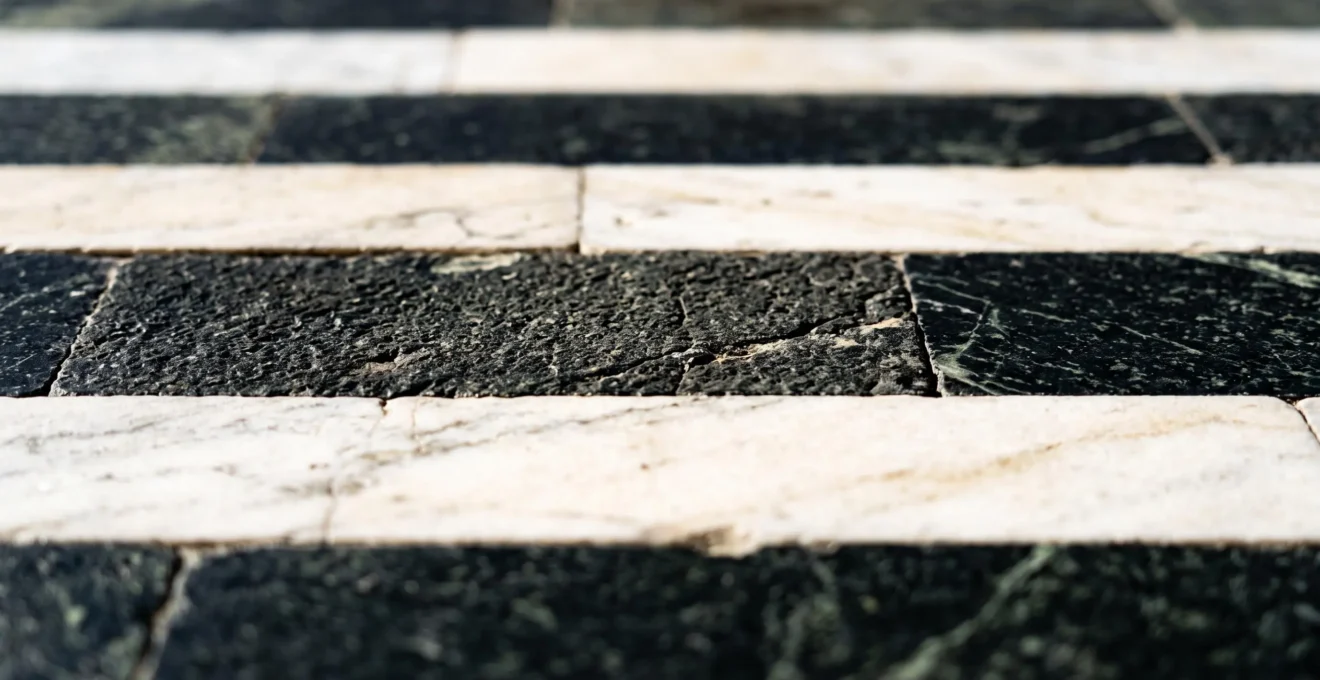
The most common traveler error treats Siena as a day-trip checkbox between Florence and Rome, allowing three hours before rushing to the next destination. This approach misses what makes Siena exceptional: the absence of rush. Medieval street networks weren’t designed for efficiency but for defence and social hierarchy, creating winding pathways that reveal Gothic palaces, hidden fountains, and neighbourhood squares serving as community centres since the 1300s. The Duomo’s interior alternates black and white marble stripes in hypnotic patterns, while the library frescoes depict Renaissance humanism in colours that remain vivid after 500 years. A seven-kilometre fortified wall still surrounds the 170-hectare historic site, with regulations including a limited traffic zone that preserves walkability. What sets Siena apart from Florence isn’t artistic innovation but architectural time capsule — a functioning medieval city where residents still live, work, and maintain traditions within Gothic structures their ancestors built. This requires overnight stay rather than drive-by tourism: morning exploration before tour buses arrive, afternoon retreat during peak heat, evening passeggiata when locals reclaim their streets.
Walk Lucca’s perfectly preserved Renaissance walls
Lucca’s defining feature isn’t visible from ground level inside the historic centre — it’s the complete circuit of Renaissance walls that surround the city in a continuous 4.2-kilometre ring elevated above street level. Built between 1504 and 1645, these fortifications were designed to withstand artillery siege but never saw combat, leaving them intact when most Italian cities demolished defensive walls to accommodate 19th-century expansion. What makes Lucca unique is functional transformation: the wide rampart tops now serve as an elevated park where locals jog, cycle, and promenade above traffic, offering 360-degree views across terracotta rooftops toward the Apuan Alps. The tree-lined circuit creates a green belt separating the car-free historic core from modern suburbs, making Lucca one of Italy’s most pedestrian-friendly cities.
The experience challenges the assumption that smaller Tuscan towns serve as brief stops between major cities. Lucca rewards slow-paced exploration: bicycle rental at any of a dozen shops near city gates, leisurely circuit ride taking 45 minutes without stops, descents into the historic centre to explore Romanesque churches and Renaissance piazzas, afternoon aperitivo at cafés where residents gather rather than tourists. The walls themselves reveal Renaissance military engineering — bastions designed for cannon placement, internal chambers for ammunition storage, sally ports for surprise counterattacks. Yet the complete absence of battle damage allows visitors to walk fortress architecture in its intended form, unlike ruined castles elsewhere in Europe. What sets Lucca apart from Florence’s overwhelming art or Siena’s tourist-saturated campo is livable scale. The city maintains authentic rhythm because day-trippers remain minority compared to residents, creating an experience closer to inhabiting Tuscany than touring it. A full day suffices: morning wall circuit, midday exploration of churches and Torre Guinigi (oak trees growing atop a medieval tower), late afternoon people-watching in Piazza Anfiteatro, an oval square built on Roman amphitheatre foundations.
Discover San Gimignano’s medieval Manhattan skyline
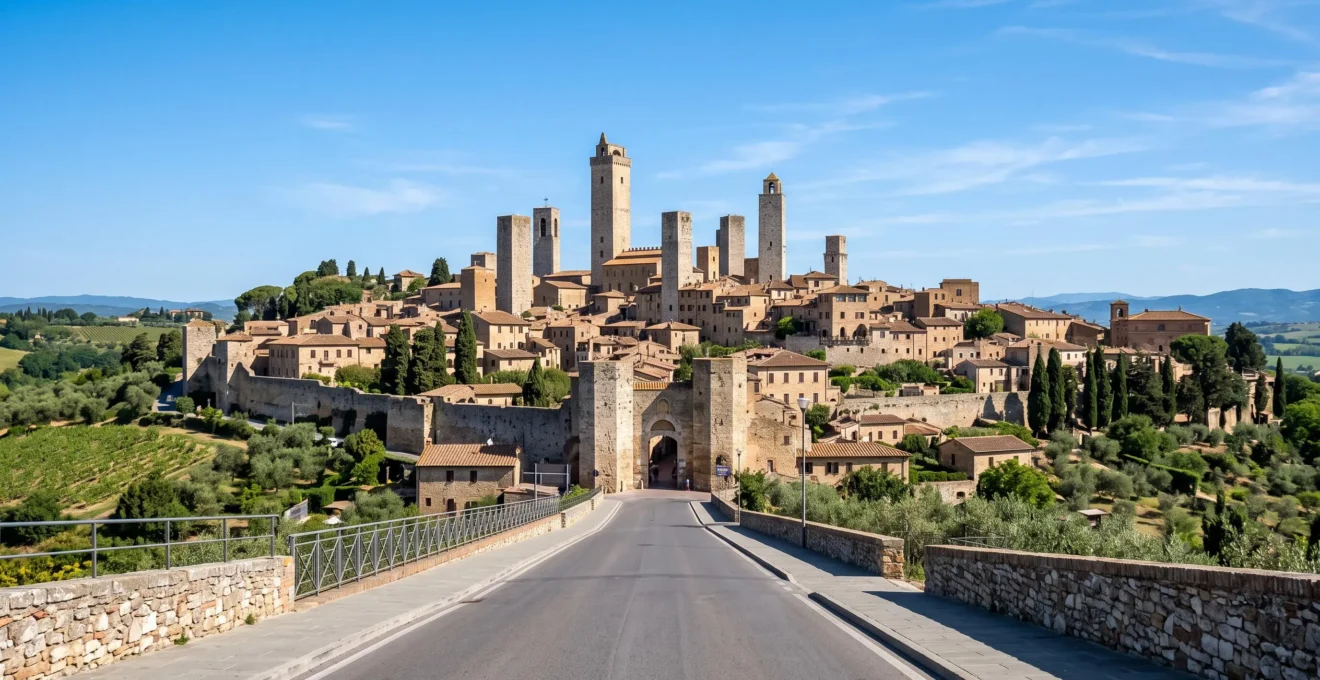
San Gimignano earned its “medieval Manhattan” nickname from tower-houses that dominate the skyline in a way no other Italian town replicates. According to the official UNESCO listing inscribed in 1990, patrician families originally built around 72 towers — some reaching 50 metres in height — as symbols of wealth and power during the 12th and 13th centuries. Only 14 survive today, but this concentration creates vertical drama absent from horizontally spread cities like Florence. The tower competition reflected civic rivalry: taller structures demonstrated family prestige, while strategic placement allowed visual communication across the Tuscan countryside for trade and defence coordination. What UNESCO recognised as exceptional testimony to medieval civilisation isn’t just architecture but urban planning that groups within a small area all structures typical of medieval life — squares, streets, houses, palaces, wells, and fountains preserved in their spatial relationships.
San Gimignano presents the opposite challenge from Florence: managing small scale that feels overwhelmed by visitors during midday hours when tour buses converge. The historic centre measures barely 500 metres across, making crowd density noticeable when several hundred tourists occupy the same two piazzas. The solution lies in timing rather than avoidance. Early morning arrival before 10:00 or late afternoon after 16:00 finds streets quieter, allowing appreciation of tower silhouettes against sky and exploration of side alleys selling Vernaccia wine (the local white varietal that earned Italy’s first DOC designation). The town’s preservation comes with trade-offs: nearly every ground-floor space serves tourist functions (gelato shops, souvenir vendors, wine tasting rooms), while actual residents number fewer than 8,000. Yet the architectural integrity remains authentic — unlike reconstructed medieval villages elsewhere, San Gimignano’s towers, churches, and civic buildings survive in their original forms, maintaining the feudal atmosphere UNESCO’s designation protects. A half-day visit suffices: tower climb for panoramic views across the Val d’Elsa, exploration of the Collegiata church’s 14th-century frescoes, wine tasting at a Vernaccia cantina, and deliberate wandering through secondary streets where stone facades and cobbled pathways reveal medieval construction methods unchanged for 700 years.
Taste your way through the Chianti countryside
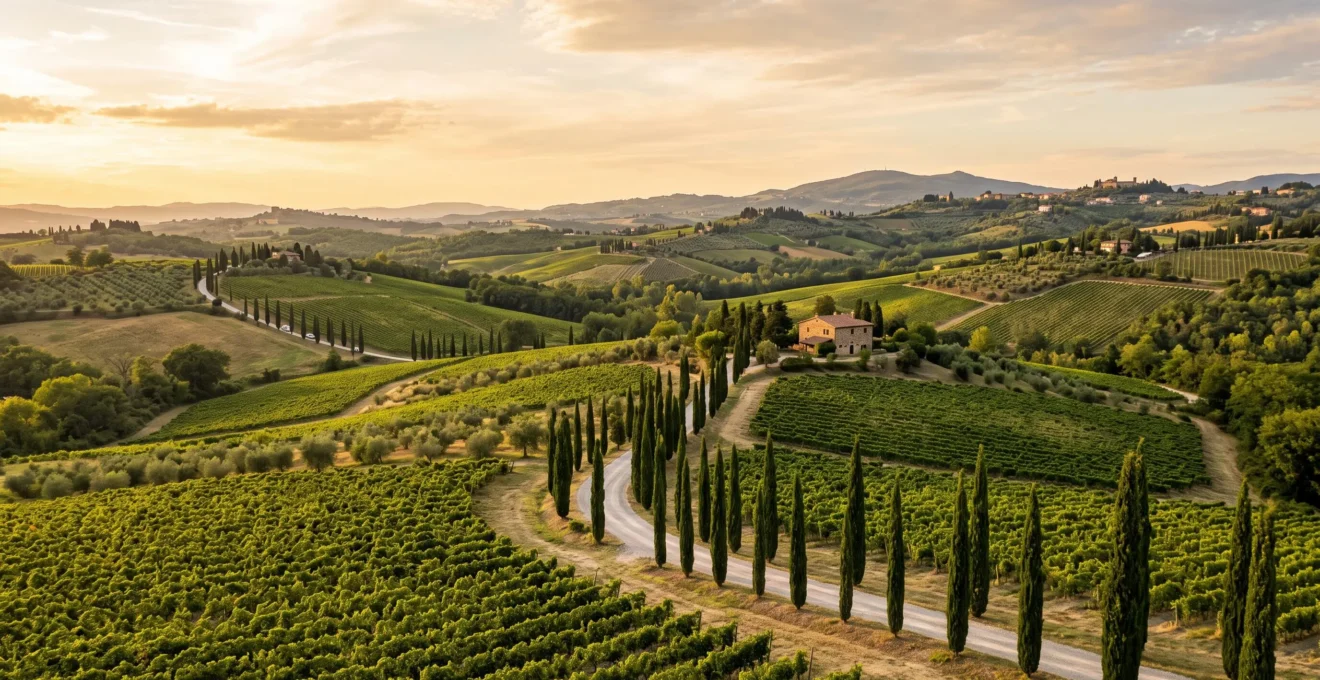
The Chianti region occupies the rolling hills between Florence and Siena, where vineyard-covered slopes alternate with olive groves, cypress allées, and medieval stone farmhouses converted to agriturismi. What makes Chianti essential isn’t wine expertise — it’s landscape immersion impossible to experience from city centres. The terroir here shaped Chianti Classico DOCG regulations protecting Sangiovese-based wines, but the region offers accessibility beyond connoisseurship. Small-scale wine estates (many family-owned for generations) welcome visitors for tastings that explain terroir differences between valleys, production methods balancing tradition with modern technique, and food pairings connecting wine to Tuscan cuisine. The question most travelers ask wrongly is “Do I need to rent a car for Chianti?” when the real question should be “Which accessible Chianti experiences suit my time and budget?”
Organised wine tours from Florence or Siena solve the designated driver problem while reaching estates inaccessible by public transport, typically visiting 2-3 wineries over a half-day with lunch at a vineyard restaurant. The format works for travelers prioritising efficiency over spontaneity. Self-directed alternatives include staying at a Chianti agriturismo (farm-stay accommodation) where estate wine comes with dinner, or cycling routes connecting villages like Greve, Panzano, and Radda through gentle hills manageable for moderate fitness levels. The experience shifts from monument tourism to agricultural immersion: morning walks through vineyard rows heavy with September grapes, afternoon tastings explaining why north-facing slopes produce different characteristics than south-facing, evening meals where olive oil, pecorino cheese, and cured meats come from properties visible through the window. What separates Chianti from wine regions elsewhere is integration with medieval heritage — tasting rooms occupy Renaissance villa cellars, vineyard views include 11th-century abbeys, village piazzas host weekend markets selling products from surrounding farms. A full day minimum allows proper immersion: two winery visits with guided tastings, a slow lunch pairing local wines with traditional dishes, and deliberate travel between locations where the landscape itself becomes the attraction.
Timing your Chianti visit for optimal experience: May through June and September through October offer the best balance of weather and accessibility. Avoid August when Italian vacation crowds peak and some estates close for family holidays. Late September coincides with harvest (vendemmia), when vineyards operate at full activity — some estates limit visits during this period, but those that welcome guests offer rare glimpses of grape processing from vine to barrel. Spring months showcase green landscapes and wildflowers, while autumn delivers golden light and the harvest atmosphere that defined Tuscan agriculture for centuries.
How many days do I need to visit these six experiences?
A minimum of four full days covers all six experiences at a sustainable pace: two days for Florence (Renaissance art and museums require time), one day combining Pisa and Lucca (geographically close and manageable together), one day for Siena, and integrated stops at San Gimignano and Chianti vineyards while traveling between cities. Five to six days allows deeper exploration without rushing. Attempting all six in three days or less results in surface-level tourism that misses what makes each experience distinctive.
Which city works best as a base for exploring all of Tuscany?
Florence offers the most accommodation options, restaurant variety, and transport connections, making it the practical base for travelers prioritising convenience. Siena provides a more immersive medieval atmosphere with fewer crowds in the evenings after day-trippers depart. For those staying in one location, Florence’s central position makes daily excursions to Pisa, Siena, Lucca, and San Gimignano feasible using regional transport. Travelers comfortable changing hotels might split stays between Florence (3 nights) and Siena (2 nights) to reduce daily travel time while experiencing both cities properly.
Is Italian language knowledge required for navigating Tuscany?
Basic Italian phrases improve interactions but aren’t mandatory in major tourist areas where English appears on signs, menus, and museum audio guides. Florence, Pisa, and Siena see enough international visitors that accommodation staff, restaurant servers, and museum personnel routinely communicate in English. Smaller towns like Lucca and San Gimignano have less English fluency, but visual communication and translation apps handle most situations. The effort to learn essential phrases (greetings, numbers, please/thank you) demonstrates respect and often elicits warmer responses from locals who appreciate the attempt.
When should I visit to avoid overwhelming crowds?
April through early June and September through October deliver the best crowd-to-weather ratio. July and August bring peak tourism alongside intense heat that makes midday sightseeing uncomfortable. November through March see fewer visitors but shorter daylight hours, occasional cold rain, and some attractions operating on reduced schedules. Within any season, timing matters: arrive at major museums at opening time, visit popular squares early morning or late afternoon, and schedule Florence museum visits midweek rather than weekends when Italian domestic tourists add to international crowds.
Can I realistically visit all six experiences in a single trip?
Absolutely, with proper planning and realistic time allocation. The five cities (Florence, Pisa, Siena, Lucca, San Gimignano) sit within 85 kilometres of each other, making multi-city exploration feasible using regional transport or multi-day passes. Chianti vineyards occupy the territory between Florence and Siena, allowing integration into travel days rather than requiring separate excursions. The key is accepting that “visiting” doesn’t mean seeing everything — it means experiencing each destination’s distinctive character without attempting encyclopedic coverage. Four to six days suffices for engaged travelers comfortable with selective depth over exhaustive breadth.
Your next move
Tuscany’s appeal lies in density — Renaissance masterpieces, medieval preservation, and agricultural landscapes concentrated within a region smaller than many single countries. These six experiences represent deliberate curation over completionist tourism: each offers something unreplicable elsewhere while remaining accessible to travelers navigating without rental cars. The practical challenge shifts from “What should I see?” to “How do I sequence these experiences efficiently?” Starting in Florence establishes cultural foundation before exploring outlying cities. Booking advance museum tickets and tower climbs removes queue friction. Choosing multi-day transport passes eliminates coordination anxiety between cities. What transforms good itineraries into memorable trips isn’t seeing more attractions but allowing enough time to absorb what makes each experience significant — the light filtering through Uffizi skylights onto Renaissance canvases, the echo resonating inside Pisa’s baptistery, the medieval atmosphere preserved in Siena’s Gothic streets.
- Book Uffizi Gallery and Accademia tickets at least 2-3 weeks ahead for summer visits (advance reservations essential)
- Reserve Leaning Tower of Pisa climb time slots (capacity-limited timed entry system)
- Check Palio horse race dates if visiting Siena in July (2nd) or August (16th) — accommodation books months ahead
- Arrange multi-day transport pass for unlimited travel between Florence, Pisa, Siena, Lucca, and San Gimignano
- Download offline maps for historic city centres (mobile data coverage spotty in medieval streets)
- Learn basic Italian phrases for greetings, ordering, and thanking (goodwill gesture appreciated in smaller towns)
The question isn’t whether these experiences justify a special trip to Tuscany — it’s whether you’re willing to approach them with the patience they deserve rather than the checklist mentality that plagues overtouristed destinations.