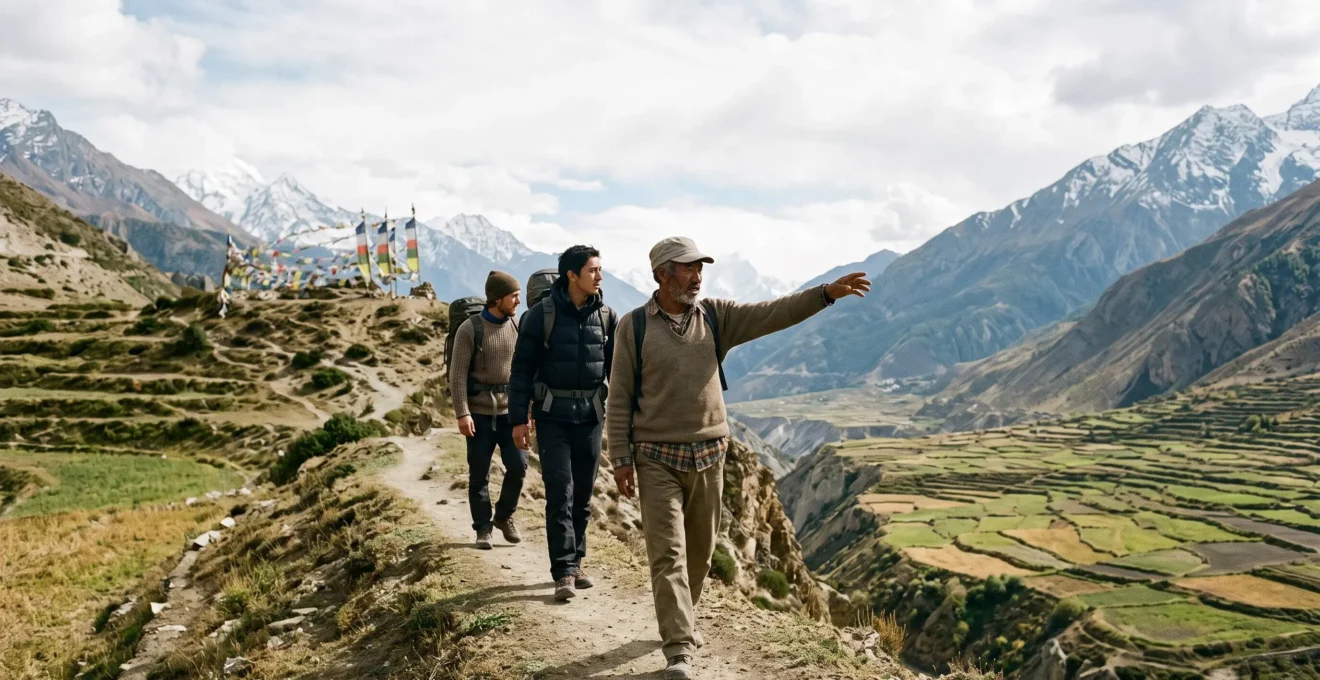
Choosing a great local tour operator isn’t about finding the ‘most authentic’ one; it’s about verifying their structural integrity, which naturally leads to both authenticity and safety.
- Economic leakage is the primary reason to choose local, as it keeps up to 70% more of your money within the destination community.
- Superficial “local” branding can be a scam (“local-washing”) designed to funnel money to foreign owners, requiring deeper vetting beyond website claims.
Recommendation: Shift from a price-and-review focus to an investigative approach centred on license verification, payment protection, and tangible community ties.
For the conscious traveller, the choice of a tour operator presents a fundamental dilemma. You want your money to empower local communities, to foster genuine connection, and to experience a destination on its own terms. This naturally pushes you towards smaller, locally-owned businesses. Yet, a voice of caution whispers about safety standards, reliability, and the risk of scams. The internet is filled with advice to “read reviews” or “check their website,” but this surface-level guidance fails to address the sophisticated ways money is siphoned out of local economies and the real-world risks of poorly run operations.
The common perception is that one must often trade safety for authenticity, or community benefit for corporate reliability. This is a false choice. The truth is that a genuinely safe and reliable operator is almost always a genuinely local one, and vice-versa. The key is not to look for the superficial signs of authenticity, but to investigate the operator’s structural integrity—the deep-seated connection between their business model, their safety protocols, and their role within the community.
This guide will equip you with a new framework for vetting. We will move beyond platitudes to explore the core economic principle of tourism leakage, arm you with a concrete checklist to identify red flags, and provide a clear lens through which to compare operators. You will learn to spot the scams, understand the nuances of different travel styles, and ultimately, interact with the communities you visit in a more respectful and impactful way. This is about making choices that align your values with your actions, ensuring your journey is as enriching for your hosts as it is for you.
This article provides a comprehensive framework to help you navigate these choices. By understanding the underlying structures of the tourism industry, you can make informed decisions that enhance your safety and enrich your travel experience. Explore the sections below to become a more discerning and responsible traveller.
Summary: A Guide to Vetting Local Tour Operators
- Why Do Local Operators Keep 70% More Revenue in Destination Communities?
- How to Vet Local Tour Operators for Safety and Authenticity?
- Local Operator vs International Chain: Which for Remote Destination Treks?
- The “Local” Label Scam That Funnels Money to Foreign Owners
- When to Book Directly With Local Operators Versus Using Aggregator Platforms?
- Lodge Stays vs Camping: Which Supports Local Himalayan Economies Better?
- How to Identify Genuinely Local Restaurants in Tourist-Heavy Cities?
- How to Interact Respectfully With Himalayan Communities During Treks?
Why Do Local Operators Keep 70% More Revenue in Destination Communities?
The most compelling reason to choose a local tour operator is not just a feel-good sentiment; it’s a matter of powerful economics. The core concept to understand is economic leakage. In the tourism sector, leakage refers to the portion of money spent by tourists that does not stay in the destination’s economy. Instead, it “leaks” out to pay for imported goods, services, and repatriation of profits to foreign-owned parent companies. When you book with a large international chain, a significant chunk of your payment leaves the country before it ever has a chance to circulate locally.
The scale of this leakage is staggering. While figures vary, a widely-cited study on tourism leakage in Thailand found that up to 70% of tourist money ended up leaving the country. This happens through complex supply chains where international hotels import foreign food and beverages, use booking systems owned by overseas tech giants, and pay management fees to a headquarters in another hemisphere. As tourism expert Dr. Minnaert explains:
Leakage is basically any money that is spent at the destination level that doesn’t stay there, and doesn’t circulate within the destination. It leaks out.
– Dr. Minnaert, Much Better Adventures Magazine
In contrast, a genuinely local operator is deeply embedded in the local economy. They hire local guides, buy produce from the village market, use family-owned lodges, and contract local drivers. This creates a powerful multiplier effect, where your tourist dollar circulates multiple times within the community, supporting a web of interconnected livelihoods. The Maldives provides a powerful case study: after decades of seeing over 70% of resort revenue lost to leakage, the rise of locally-owned guesthouses allowed Maldivians to build stronger local supply chains—from diving to crafts—and reclaim a much larger share of the tourism value they were creating.
How to Vet Local Tour Operators for Safety and Authenticity?
Once you’ve committed to supporting local operators, the challenge becomes separating the legitimate, high-quality businesses from the risky or fraudulent ones. Vetting for safety and authenticity requires moving beyond surface impressions and performing a “structural integrity” check. A truly authentic experience is a byproduct of a well-run, safe, and community-integrated operation, not something that can be artificially staged. The most critical indicators are not found in glossy brochures but in the operator’s transparency and professional conduct.
Key areas to investigate include official registration, payment security, and independent verification. A legitimate operator, no matter how small, will be registered with a local tourism authority. This isn’t just bureaucracy; it often means they have met minimum safety, insurance, and legal requirements. Likewise, their payment methods speak volumes. A demand for cash-only or an untraceable wire transfer is a major red flag, suggesting a lack of accountability. Reputable businesses provide secure payment options like credit cards or established platform gateways, which offer you, the consumer, a layer of fraud and refund protection.
Finally, while on-site testimonials are easily faked, a consistent pattern of reviews across multiple independent platforms like Google, TripAdvisor, or Trustpilot is harder to manipulate. Look for detailed reviews that mention specific guides or experiences, as these are more likely to be genuine. The goal is to build a composite picture from multiple, verifiable sources. The following checklist provides a concrete action plan to guide your vetting process.
Your Vetting Action Plan: 5 Critical Checks
- Ask for the operator’s license or registration number and verify it directly with the local tourism board or government registry.
- Cross-reference testimonials with independent review platforms (Google Business, TripAdvisor, Trustpilot) rather than trusting on-site reviews alone.
- Investigate any price that sits 40% or more below the local average, since discounts often come from cut safety equipment or unlicensed vehicles.
- Treat cash-only or wire-transfer-only payment demands as a major red flag; legitimate operators typically offer credit card or platform-based refund protection.
- Get written documentation before paying anything: itinerary, inclusions/exclusions, cancellation policy and liability terms.
Local Operator vs International Chain: Which for Remote Destination Treks?
Nowhere is the choice between a local operator and an international chain more critical than in remote, high-stakes environments like mountain treks. Here, the decision impacts not only the local economy but your direct safety and the quality of your experience. While a large international brand may project an image of standardized safety, this often masks a rigidity that can be a liability when conditions on the ground change rapidly. Their safety net is a corporate protocol managed from a distant headquarters.
A true local operator, by contrast, possesses a different kind of safety net: adaptive resilience. Their risk management is built on decades, sometimes generations, of ground-level knowledge. They know the micro-climates, the alternate trails, and, most importantly, they are part of a community fabric. In a crisis—a sudden storm, an injury, or an impassable trail—it is the local operator’s relationships that unlock immediate, on-the-ground assistance, not a call to a corporate hotline thousands of miles away. This community network is a far more robust safety net than any standardized procedure.
This choice also dictates the flexibility and authenticity of your journey. International chains sell a packaged, one-size-fits-all product. The itinerary is fixed, designed for maximum efficiency and scalability. Local operators, however, are often able to co-create an itinerary with you, adjusting for skill level, interests, and serendipitous opportunities that arise. The following table breaks down the core differences, as detailed in an analysis of remote trekking models.
| Dimension | Local Tour Operator | International Chain |
|---|---|---|
| Risk Profile | Adaptive resilience; deep ground-level knowledge of terrain, weather and community networks | Standardized corporate safety protocols, but slower to adapt to hyper-local conditions |
| Real Safety Net in a Crisis | Immediate on-the-ground assistance unlocked through community relationships | Relies on remote headquarters and rigid corporate protocol |
| Customization | Flexible, co-created itinerary adjusted to traveler skill and interests | Largely fixed, packaged, one-size-fits-all product |
| Revenue Retention in Destination | Majority of spending circulates locally through wages, food sourcing and family-run lodges | Substantial share repatriated to foreign headquarters via franchise fees and management contracts |
The “Local” Label Scam That Funnels Money to Foreign Owners
As conscious travellers increasingly seek out local businesses, a deceptive practice has emerged: “local-washing.” This is where a foreign-owned or managed company uses a sophisticated digital veil—a well-designed website with stock photos of smiling locals, a local-sounding brand name, and curated on-site reviews—to present itself as a small, indigenous enterprise. In reality, it is simply another channel for economic leakage, often with even less accountability than a major international brand.
These entities are masters of marketing, but their structural integrity is hollow. They are designed to extract revenue, not to build community. A common tactic is to establish a minimal on-the-ground presence while running all major operations (marketing, booking, finance) from abroad. The money you pay is immediately funneled out of the destination, with only a small fraction paid as wages to local staff. According to a UNCTAD assessment, import-related leakage alone can account for 40-50% of revenue in developing economies, and these “local-in-name-only” businesses are prime contributors.
Case Study: The Phantom Homestay in Vietnam
A telling example involved a solo traveller who booked a “cultural homestay and cooking class” near Hoi An, Vietnam. The operator’s website was polished, displaying a licensing badge and glowing reviews. Upon arrival, the reality was starkly different. The “homestay” was an unregistered guesthouse far from the permitted zone. The “cooking class” used pre-packaged sauces. Worst of all, the guide’s certification had long expired. An investigation revealed the license number on the website belonged to a company that had been dissolved years earlier, its credentials simply stolen and reused to create a convincing but entirely fraudulent digital facade.
This case highlights the importance of the vetting steps outlined earlier. Verifying a license number directly with a government registry, demanding secure payment methods, and cross-referencing reviews on third-party sites are your best defences against this kind of sophisticated deception. Trusting a polished website is no longer enough; you must peek behind the digital curtain.
When to Book Directly With Local Operators Versus Using Aggregator Platforms?
The rise of online travel agencies (OTAs) and aggregator platforms like Viator or GetYourGuide seems to offer a convenient solution, providing a single marketplace for countless local tours. They offer payment protection and a standardized booking process. However, this convenience comes at a significant cost to the local operators themselves. These global distribution systems are another, more subtle, form of economic leakage.
For every booking made through an OTA, the platform takes a hefty commission. This fee can be anywhere from 10% to over 30% of the total price. For a small, family-run business operating on thin margins, this is a massive slice of their revenue. To stay competitive on these platforms, operators are often forced to either cut corners on quality and safety or raise their prices, making them appear more expensive than they would be if booked directly. As a result, destinations are urged to prioritize direct booking pipelines that bypass online travel agencies charging these high commissions.
Booking directly is the single most effective way to ensure 100% of your money goes to the operator. It fosters a direct line of communication, allowing for better customization and a more personal connection from the outset. As the advocacy group Destinations International notes, direct booking is a powerful tool for empowerment.
Direct booking democratizes access, builds trust, fosters cultural exchange and keeps more revenue in local hands rather than global distribution systems.
– Destinations International, Keeping Tourism Dollars Local: A Guide for Destinations
So, when should you use an aggregator? They can be a useful tool for initial discovery—finding operators you wouldn’t have otherwise. But once you’ve identified a promising company, your next step should always be to find their direct website and book with them there. An initiative in Jamaica called “Yaad Luv” demonstrated this power by creating a direct-referral campaign that drove hundreds of direct inquiries to small businesses, bypassing aggregators entirely and proving that direct pipelines can transform local opportunities.
Lodge Stays vs Camping: Which Supports Local Himalayan Economies Better?
In the iconic trekking regions of the Himalayas, your choice of accommodation—staying in local teahouses (lodges) or joining a fully-catered camping trek—has profoundly different impacts on the local economy. At first glance, teahouse trekking seems the obvious choice for supporting locals. You are, after all, paying a family directly for a room and meals. This model is straightforward and ensures money flows to lodge owners along the trail. Guide and porter costs on a typical teahouse trek are relatively modest, ensuring a good portion of spending goes towards accommodation and food.
However, this model can lead to a concentration of wealth. As one trekking analyst points out, “The revenue generated might be limited to a few families controlling the popular teahouses, while other community members might not see as much benefit.” In hyper-popular areas, the most strategically located lodges can dominate the economic landscape, leaving farmers, artisans, and other families on the periphery.
A well-organized camping trek, while seemingly less “local,” can paradoxically distribute economic benefits more widely. A good local camping operator will hire a larger support crew of cooks, porters, and assistants from various villages, spreading wages across a broader community base. They will purchase bulk food supplies—like vegetables, grains, and meat—from multiple farmers along the route, not just from the teahouse with the best location. This model creates a more extensive and resilient supply chain, injecting cash into more pockets. The key, of course, is choosing an operator with a proven commitment to local sourcing and fair wages. The best approach isn’t always the most obvious one; it requires looking deeper into how the money actually flows through the community.
How to Identify Genuinely Local Restaurants in Tourist-Heavy Cities?
Finding an authentic, locally-owned restaurant in a city swarming with tourists can feel like searching for a needle in a haystack. The main thoroughfares are often lined with “tourist traps”—eateries with multi-language menus, generic international fare, and slick, impersonal service. These establishments are often owned by large, non-local hospitality groups and are experts at attracting tourist dollars while providing little in the way of genuine local culture or cuisine. Like with tour operators, the key is to look for signs of structural integrity, not just superficial charm.
The first rule is to walk away from the main square. Venture a few blocks into the side streets and residential areas where locals actually live and work. A genuinely local restaurant doesn’t need a prime-location rent; its reputation is its marketing. Look for unassuming storefronts and signage that is primarily in the local language. A menu posted outside is a good sign, but be wary of menus with pictures for every dish—this is often a sign they cater exclusively to tourists. A truly local spot often has a shorter, more focused menu, sometimes even handwritten, that changes based on what is fresh at the market that day.
Listen for the language being spoken inside. If you hear a buzz of local chatter, you’re likely in the right place. Observe the clientele: are they mostly tourists with cameras, or a mix of local workers, families, and friends? Pay attention to the rhythm of service. Many local eateries have specific, limited hours, closing between lunch and dinner, unlike tourist-focused restaurants that stay open all day. Ultimately, it’s about trusting your senses and looking for the small, un-marketed signs of a place that is woven into the fabric of its neighborhood, rather than one that is merely performing for an audience.
Key takeaways
- Embrace Direct Booking: Bypassing aggregator platforms ensures up to 30% more of your money stays with the local operator and in the community.
- Verify, Don’t Trust: A polished website is not proof of legitimacy. Always verify an operator’s license number with official sources and demand secure payment options.
- Safety Is Structural: The safest operators in remote areas are often local ones, whose safety net is built on deep ground-level knowledge and community relationships, not just corporate protocols.
How to Interact Respectfully With Himalayan Communities During Treks?
Your journey as a conscious traveller culminates in the quality of your interactions. Having chosen a responsible operator and navigated the local economy with care, the final piece is to engage with the host community in a way that is respectful, humble, and enriching for all parties. In culturally distinct regions like the Himalayas, this requires a shift from a consumer mindset to that of a guest. Your guide is your primary resource for navigating cultural norms, but some universal principles always apply.
The first principle is observation and humility. Local customs around greetings, dining, and entering homes can be complex. Watch how your guide and other locals interact, and follow their lead. Learning a few basic phrases in the local language—such as “hello” (Namaste), “thank you” (Dhanyabad), and “it’s beautiful” (Ramro chha)—is a small effort that signals immense respect and opens doors to warmer interactions. When it comes to photography, always ask for permission before taking a person’s picture, especially of elders or children. A smile and a gesture towards your camera is a universal question that is easily understood. Never offer money or sweets to children, as this can encourage begging and create unhealthy dependencies.
Dress modestly, especially when near religious sites like monasteries or stupas. This generally means covering your shoulders and knees. When visiting a monastery, move in a clockwise direction (a practice known as ‘kora’) and avoid touching religious artifacts. Be mindful of your consumption; dispose of all your waste properly, and try to minimize your use of single-use plastics, which are a major environmental challenge in remote mountain regions. Your responsible operator should facilitate this, but the ultimate responsibility is yours. By acting as a thoughtful and considerate guest, you complete the circle of responsible tourism, ensuring your presence is a positive force, not a disruptive one.
Start applying this vetting framework to your next travel plans today. By moving beyond surface-level reviews and investigating the structural integrity of operators, you can travel with the confidence that your journey is not only safe and authentic but also a genuine force for good in the communities you have the privilege to visit.