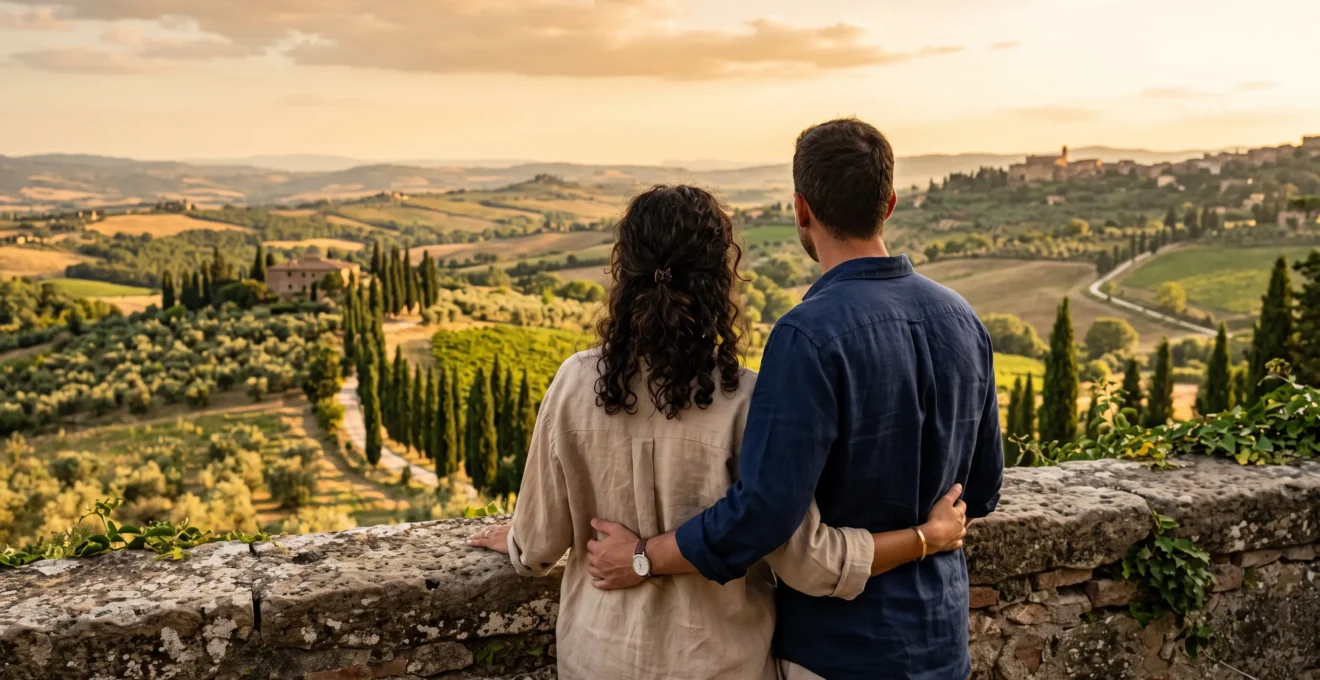
The short answer: yes, with one consideration. Tuscany delivers vineyard sunsets, Renaissance art, and medieval villages where time stopped. According to the European honeymoon market study published by CBI, 72% of Europeans take a honeymoon, many choosing Italy for culture and romance. The challenge isn’t whether Tuscany works — it’s navigating multiple villages without driving stress.
Your Tuscany honeymoon essentials in 30 seconds:
- Vineyard landscapes, Renaissance art and medieval villages create the romantic atmosphere couples actually want
- Multi-day transport passes connect Florence, Siena and San Gimignano without car rental stress
- Spring and autumn offer mild weather with fewer crowds than peak summer
- Plan 3-5 days to balance city culture with countryside wine experiences
What makes Tuscany uniquely romantic for honeymooners?
What separates Tuscany from beach resorts isn’t prettier sunsets — it’s layered experience. Morning cappuccino in a Renaissance piazza, afternoon wine tasting in centuries-old cellars, evening strolls through medieval hilltop villages where every corner reveals another photograph. Tropical islands offer isolation; Tuscany offers immersion.
The romantic reputation translates into demand. As measured in the IRPET 2024 Tuscany tourism report, arrivals grew 5.9% in 2024, with overnight stays reaching records.
Wedding tourism alone generates around €160 million annually — 30% of Italy’s entire wedding market, according to the record visitor figures consolidating Tuscany’s romantic appeal.
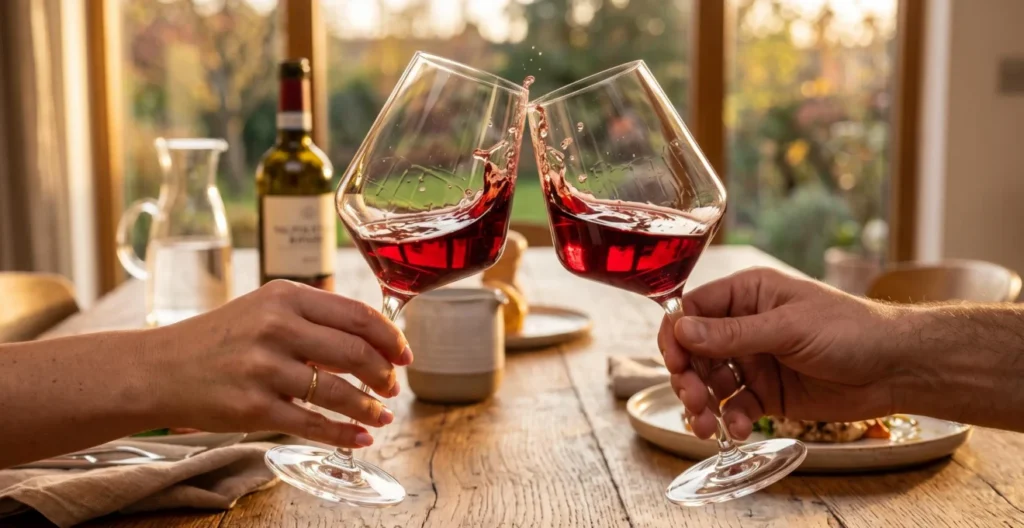
The romance operates on multiple levels. Vineyard landscapes provide visual drama for photos. Agriturismo stays offer privacy without isolation. Cooking classes become shared experiences. Florence‘s Uffizi or Siena’s cathedral create cultural connection, not sightseeing obligations.
Wine tasting experiences in Tuscany operate differently from industrial vineyard tours elsewhere. Small family estates in Chianti Classico region welcome couples for intimate afternoon sessions — typically two hours exploring cellars carved into medieval hillsides, tasting four to six wines paired with local pecorino cheese, prosciutto and olive oil. The hosts often own the vineyards for generations, sharing stories about harvest traditions and winemaking philosophy that transform tasting from consumption into cultural education. Unlike scripted commercial tours, these encounters feel like visiting knowledgeable friends who happen to produce exceptional wine. The sensory experience deepens romantic connection: swirling Sangiovese in crystal glasses, identifying cherry and violet notes together, discovering shared preferences you never discussed before marriage. These moments create intimacy through shared discovery rather than passive sightseeing, building memories anchored in taste, smell and conversation rather than photographs alone.
Most couples discover appeal beyond obvious attractions: afternoon wine with pecorino, golden light stretching across sunsets, genuine warmth of family-run trattorias. These moments unfold naturally when you slow down.
Navigating Tuscany’s villages without the stress of driving
Take a common scenario: a couple rents a car to explore Chianti villages, confident about freedom and flexibility. Day one reality: navigating narrow medieval roads designed for donkeys, anxiety about scraping rental car paint on stone walls, 30-minute searches for parking in San Gimignano‘s pedestrian zones. One partner drives while the other stresses about directions; nobody enjoys the scenery.
The navigation challenge affects most couples visiting Tuscany’s countryside. Medieval village layouts confuse GPS systems, parking restrictions change by season, and anxiety about vehicle damage on narrow stone passages creates tension between partners. For couples wanting village-hopping freedom without navigation anxiety, the Tootbus Pass connects Florence, Pisa, Siena, Lucca and San Gimignano with unlimited travel across 1, 2, 3 or 5-day periods.
Smart transport without driving stress: Multi-day passes operate on Green and Terracotta routes linking Tuscany’s major destinations. Both partners can relax and enjoy views together, with flexibility to hop off at any village that catches your eye. Promotional discounts frequently available can reduce multi-day costs significantly compared to standard pricing.
The counter-intuitive reality: not driving can enhance intimacy. Both partners share the scenery instead of one navigating. Spontaneous choices become possible — seeing a hilltop village and deciding to explore it rather than sticking to a rigid driving route. Journey times become part of the romance, not dead time between destinations.
The practical advantages compound. No parking fees (Florence charges €2-3 per hour in city center zones). No fuel costs averaging €80-100 for a week’s countryside driving. No insurance excess worries when navigating tight village lanes. Both partners arrive at wine tastings able to enjoy samples, rather than one abstaining to drive safely.
Multi-day transport pass
- Both partners enjoy scenery together without navigation stress
- Unlimited travel enables spontaneous village discoveries
- No parking fees or fuel costs
- Both can enjoy wine tastings without designated driver duty
Car rental
- One partner drives while other navigates — nobody fully relaxes
- Parking searches waste romantic afternoon time
- Narrow medieval lanes create anxiety about vehicle damage
- Combined costs (rental, fuel, parking, insurance) often exceed pass pricing
Choosing your base: Florence’s culture or countryside charm
The accommodation choice often paralyzes couples: Florence’s Duomo-view hotel rooms versus countryside villas surrounded by vines. Think of it as choosing between gallery opening energy and monastery library tranquility. Both deliver romance; the question is which rhythm matches your honeymoon vision.
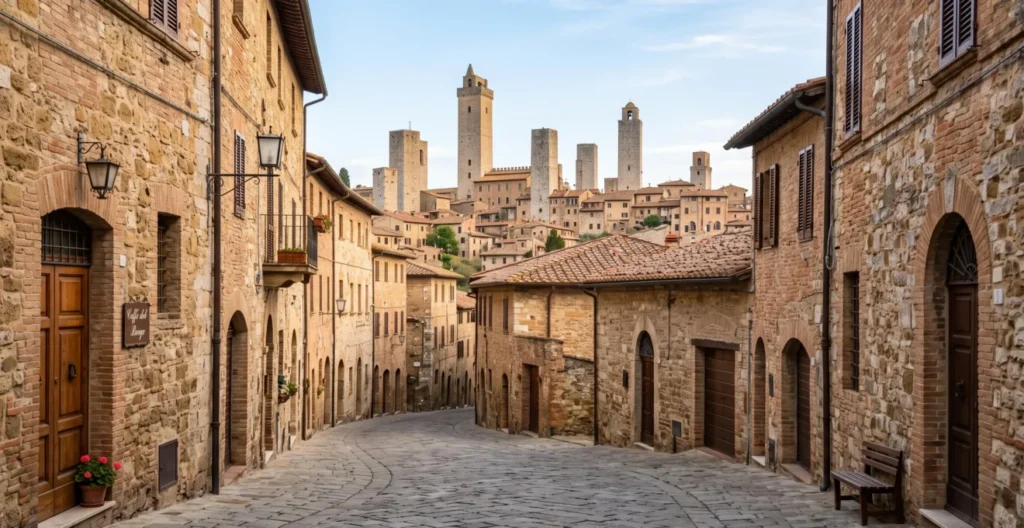
Florence rewards culture enthusiasts. Stepping out your hotel into Renaissance streetscapes, walking to Uffizi Gallery before tour groups arrive, discovering intimate wine bars tucked behind Piazza della Signoria. The city hums with centuries of artistic heritage. Dining variety exceeds anywhere else in Tuscany — Michelin-starred innovation alongside traditional trattoria cooking. For couples energized by urban sophistication wrapped in historic beauty, Florence provides constant stimulation.
Which Tuscan base matches your honeymoon style?
- If you prioritise museums, architecture and dining variety:
Florence offers Renaissance immersion with walkable access to Uffizi, Duomo and diverse restaurants. Use it as a base for day trips to Siena and San Gimignano via transport passes.
- If you want vineyard views and total privacy:
Chianti countryside agriturismos deliver isolation surrounded by vines. Ideal for couples seeking quiet intimacy, though dining options require driving or pre-arranged meals.
- If you value both culture and countryside without relocating:
Siena provides medieval atmosphere with easier access to Chianti vineyards than Florence, while maintaining authentic city character and sufficient dining variety.
- If you want maximum flexibility to explore different villages:
Florence or Siena central locations with multi-day transport passes enable spontaneous daily decisions about which village to explore, without commitment to countryside isolation.
Countryside stays offer opposite appeal. Waking to birdsong and vineyard views, breakfast featuring farm-fresh ricotta and honey, afternoons spent entirely on the property’s terrace with local wine. Agriturismos — working farms offering accommodation — provide authentic rural Italian life. Many include breakfast featuring estate-produced olive oil, honey and preserves; some offer cooking classes using vegetables from their kitchen gardens. The properties range from rustic farmhouses with minimal amenities to renovated villas with swimming pools and spa services. Evening meals, when available, showcase traditional Tuscan recipes using ingredients grown meters from your table — pappa al pomodoro soup, panzanella salad, bistecca alla fiorentina from local Chianina cattle. The trade-off: limited restaurant options within walking distance and reliance on transport for village exploration.
The hybrid approach often works best: establish a single base (Florence or Siena) and take day trips. You avoid exhausting accommodation changes mid-honeymoon while experiencing both city energy and countryside tranquility. Multi-day transport passes make this practical — morning museum visits, afternoon vineyard tours, evening return to the same comfortable hotel room.
Your questions about planning a Tuscany honeymoon
The practical questions couples ask reveal common concerns that deserve direct answers. Here’s what typically holds people back from booking — and why those concerns often dissolve once you understand the realities.
When is the best time to visit Tuscany for a honeymoon?
Late April through May and September through mid-October offer the sweet spot: mild weather averaging 18-24°C, fewer crowds than peak summer, and vineyard landscapes at their most photogenic. August brings heat and tourist congestion that can diminish romantic atmosphere in popular villages.
How many days should we plan for a Tuscany honeymoon?
Three to five days allows meaningful experiences without exhausting yourselves. Shorter trips force rushed itineraries; longer stays risk diminishing returns unless you extend into coastal areas or other Italian regions. Most couples find four days ideal for balancing Florence’s culture with countryside wine experiences.
What’s a realistic budget for a Tuscany honeymoon?
Honeymooners typically spend up to 20% of their total wedding budget on the trip. For Tuscany specifically, expect £3,000-5,000 for a 4-5 day trip including mid-range accommodation (£120-180 per night), dining (£60-80 daily for two), transport passes (£40-60 for multi-day options), and experiences like wine tastings or cooking classes.
Is Tuscany too touristy for an intimate honeymoon?
Florence and Pisa attract significant crowds year-round, but Tuscany’s romantic appeal lies partly in lesser-known villages. San Gimignano, Lucca, and Chianti countryside vineyards offer authentic experiences with manageable visitor numbers, especially if you visit early morning or late afternoon when day-trippers have left. Timing and village selection matter more than the region itself.
Do we need to speak Italian?
No, though learning basic phrases enhances connection with locals. Florence, Siena and major tourist villages operate comfortably in English. Countryside agriturismos may have limited English-speaking staff, but hospitality transcends language barriers. Translation apps handle restaurant menus and transport information effectively.
Should we book accommodation and experiences in advance?
Book accommodation as soon as you confirm dates, especially for spring and autumn travel when demand peaks. Popular wine tastings and cooking classes fill weeks ahead during high season. Transport passes can typically be purchased shortly before travel. Museum tickets for Uffizi or Accademia require advance reservation to avoid multi-hour queues.
What should we pack for a Tuscany honeymoon?
Comfortable walking shoes matter more than any other item — cobblestone streets and vineyard paths punish inadequate footwear. Layers work better than heavy clothing; spring and autumn temperatures shift between cool mornings and warm afternoons. Women should pack one dressy outfit for upscale Florence restaurants; men need long trousers for church visits (shorts prohibited in many religious sites). A small day backpack carries water, sunscreen and camera essentials during village exploration. Leave excessive luggage at home — you’ll move between locations and navigate stairs in medieval buildings without lift access.
Can we combine Tuscany with other Italian destinations on our honeymoon?
Tuscany pairs naturally with Rome (90 minutes by train south) or Venice (2 hours north), creating multi-region itineraries. The risk: spreading yourselves too thin across destinations diminishes the slow immersion that makes Tuscany romantic. If you have 7-10 days total, consider splitting time between Tuscany and one other region. Shorter trips benefit from single-region focus. The travel time between regions isn’t excessive, but unpacking and repacking mid-honeymoon creates logistical friction that can erode relaxation.
Rather than conclude with a summary, consider this forward-looking question: if Tuscany combines the visual beauty, cultural depth and practical accessibility you’re seeking, what’s preventing you from experiencing those vineyard sunsets and medieval streets together? The planning complexity couples fear often dissolves once they understand transport solutions exist and accommodation choices become clearer. Your honeymoon deserves a destination that delivers romance without logistical stress — and Tuscany, approached thoughtfully, achieves precisely that balance.